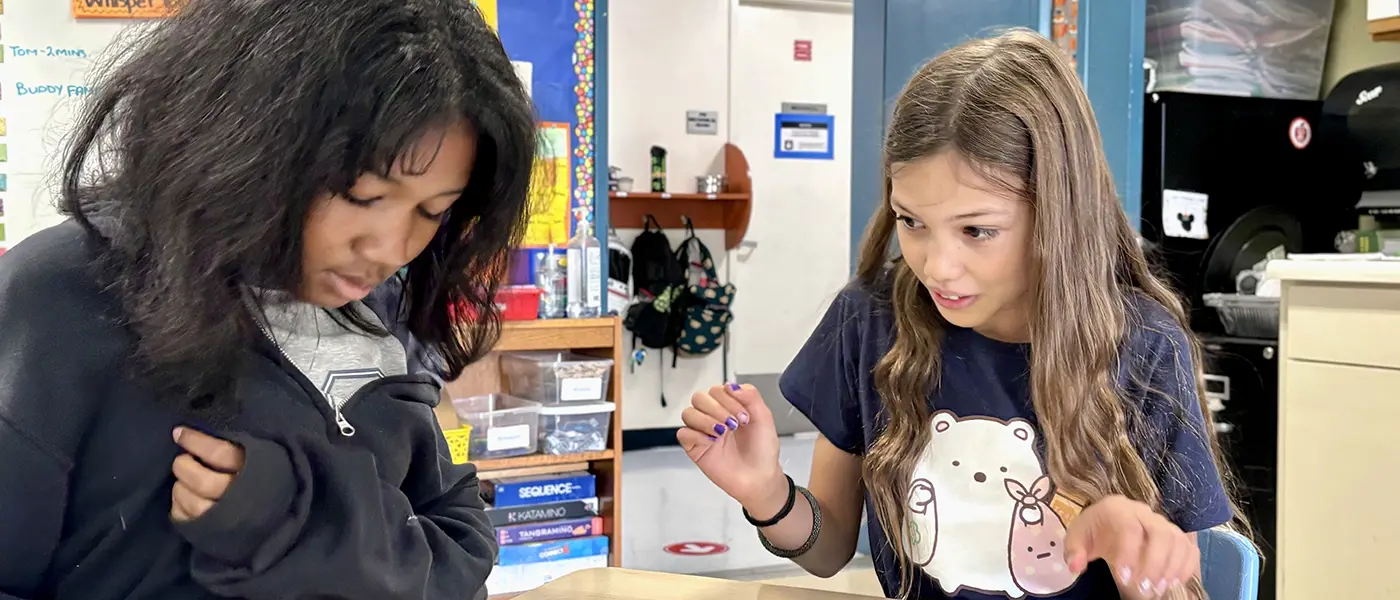
The Lower School academic program promotes joy and a lifelong passion for learning in a supportive, caring, and warm environment where students are poised to thrive and take on challenges.
Learning is characterized by our mission to inspire students to reach for their next challenge, embrace differences, and develop the intellectual and emotional courage to be ready for anything.
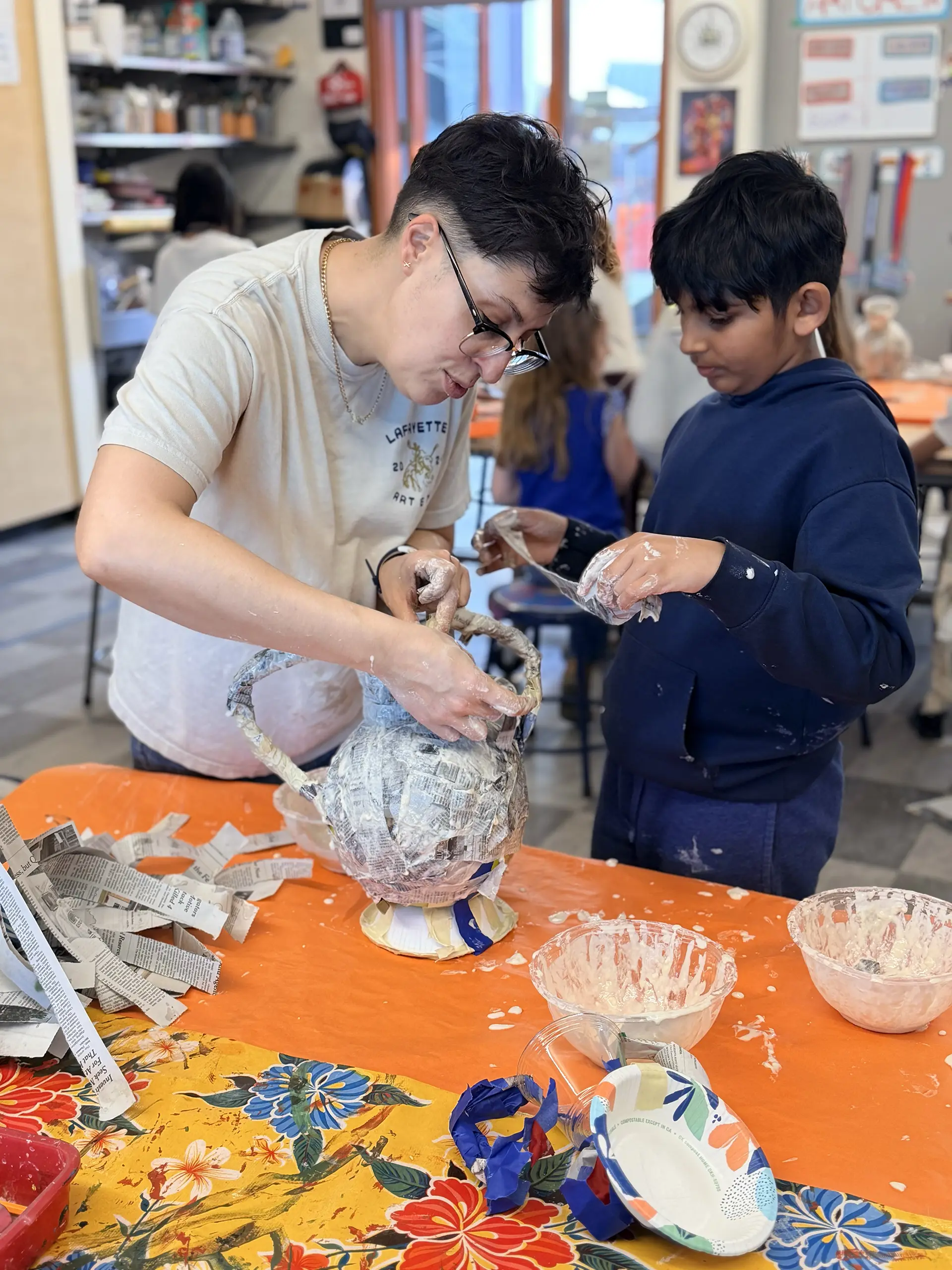 | Inspiring students to reach for their next challenge...Preparing students for their next challenge, whether it be for their next year of learning or high school or beyond, our Lower School academic program encompasses learning that promotes growth and recognizes that to learn well, each student needs appropriate challenge and success. To achieve this, Redwood Day students learn in their Optimal Learning Zones. The Optimal Learning Zone is where students are stretched just beyond what they can do independently with support and guidance to reach new levels of understanding and skill. It is supported by the Universal Design for Learning (UDL) framework which guides the design of learning environments that are accessible, inclusive, and challenging for every learner. The goal of UDL is to support learner agency, the capacity to actively participate in making choices in service of learning goals. |
Developing the emotional courage to be ready for anything…We know that social-emotional learning (SEL) is essential to developing the whole child and nurturing academic success. At Redwood Day, SEL is cultivated and integrated throughout the curriculum and program and includes teaching valuable social and life skills reflected in the Redwood Day values: honesty, inclusion, responsibility, respect, courage, empathy, and kindness. Nurturing resilience and self-regulation are also integral to social-emotional learning at Redwood Day. | 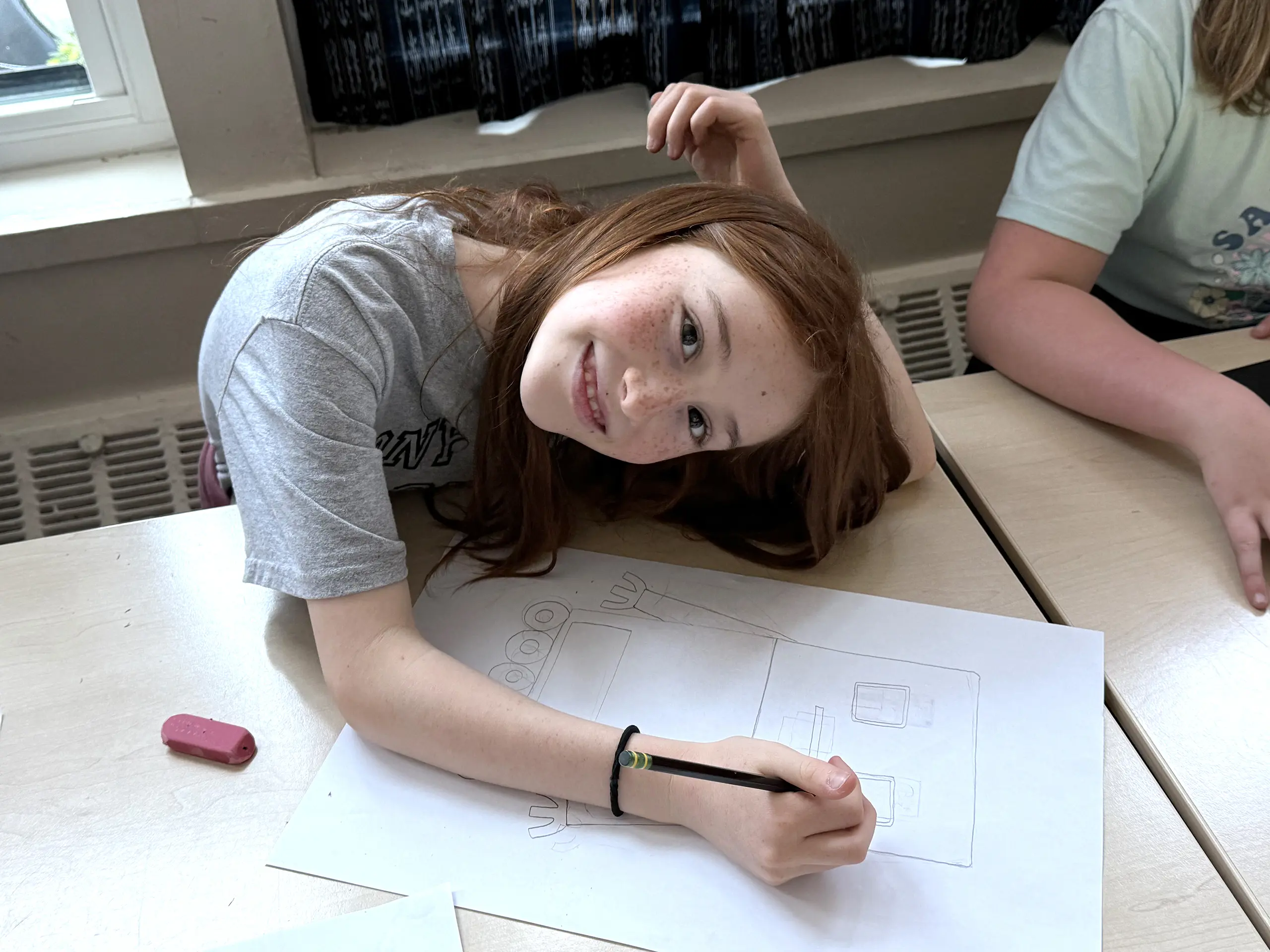 |
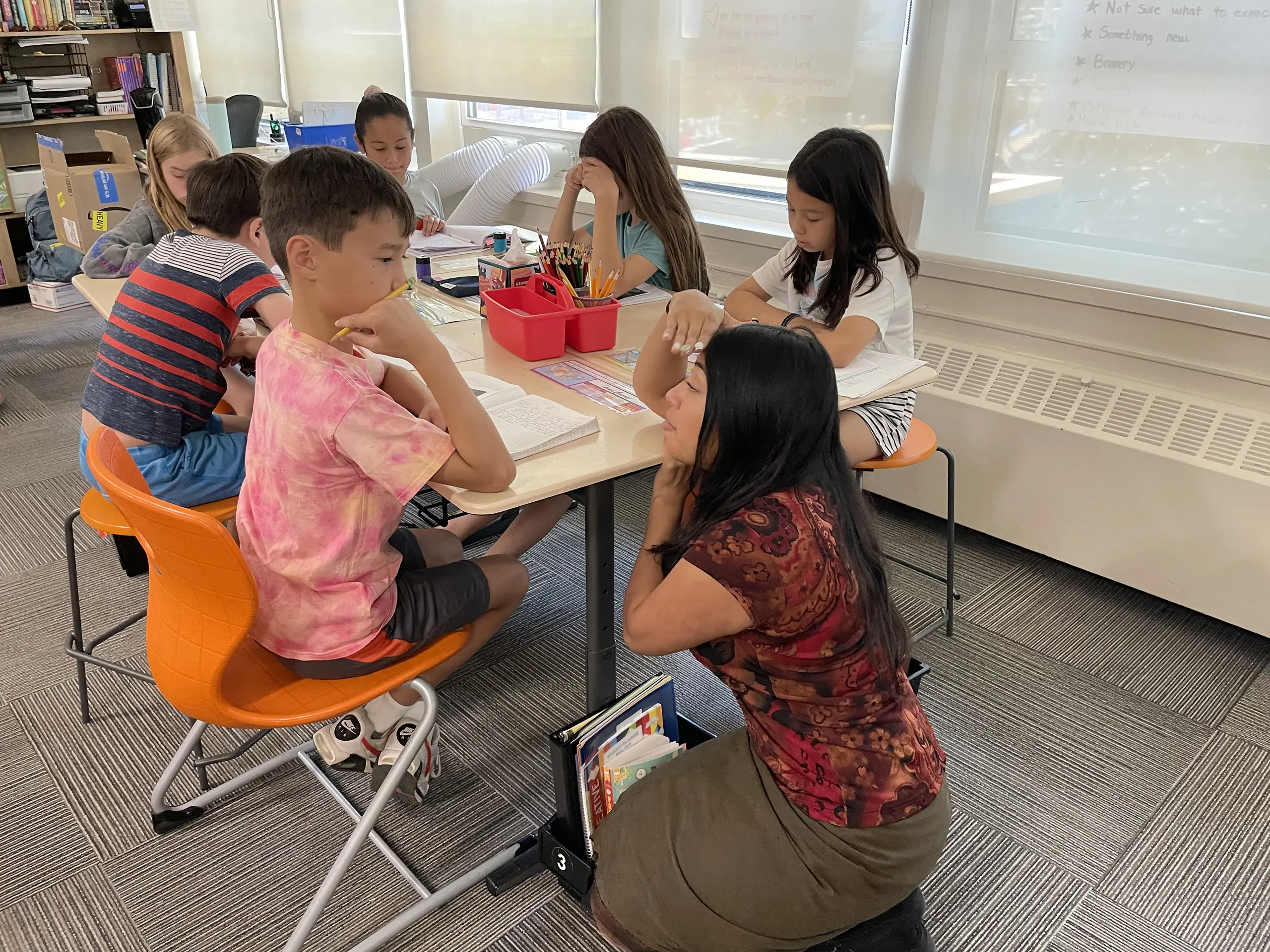 | Embracing differences…Redwood Day is dedicated to creating equitable learning environments for all students: we want every child to be seen and heard, to feel safe and valued, and to experience a sense of belonging. We want students to see, hear, support, and value others while fostering active allyship. Diversity, Equity, Inclusion, and Belonging extends across the curriculum and is rooted in the Social Justice Standards, a set of anchor standards and age-appropriate learning outcomes divided into four domains — identity, diversity, justice, and action. |
A curriculum that promotes curiosity, critical thinking, creativity, and a passion for learning…
| ENGLISH LANGUAGE ARTS |
Redwood Day’s Lower School English Language Arts program is grounded in developing foundational reading skills while fostering a lifelong enjoyment of reading through meaning-making. Students build comprehension through engaging in, listening to, reading, discussing, and understanding complex, engaging, knowledge-rich texts. They access texts that are diverse and reflect and affirm both their identities and experiences (mirrors) and new ideas and perspectives (windows) to promote empathy to understand others. Reading instruction begins with knowing where students are on the continuum of reading to identify strengths and needs to respond instructionally. We utilize a suite of assessments to benchmark and track students’ reading progress and to measure the impact of instruction.
The Lower School English Language Arts program is supported by SIPPS (Systematic Instruction in Phonological Awareness, Phonics, and Sight Words) for kindergarten and grade 1 students and Being a Reader and Being a Writer for students, K-5. Being a Reader is a comprehensive K–5 reading program that integrates foundational skills instruction, practice in reading comprehension strategies, and rich literacy experiences with explicit social skills instruction and activities that foster students’ growth as responsible, caring, and collaborative people.
Being a Writer provides student-centered writing instruction in process, genres, and conventions that utilize collaboration and peer feedback to foster an engaged writing community. Being a Writer includes explicit opportunities for students to hear, discuss, and analyze mentor texts and incorporate elements of the author’s craft, genre, and organization into their own writing. Learning grammar and writing conventions is made accessible through explicit, integrated instruction. |
| MATH |
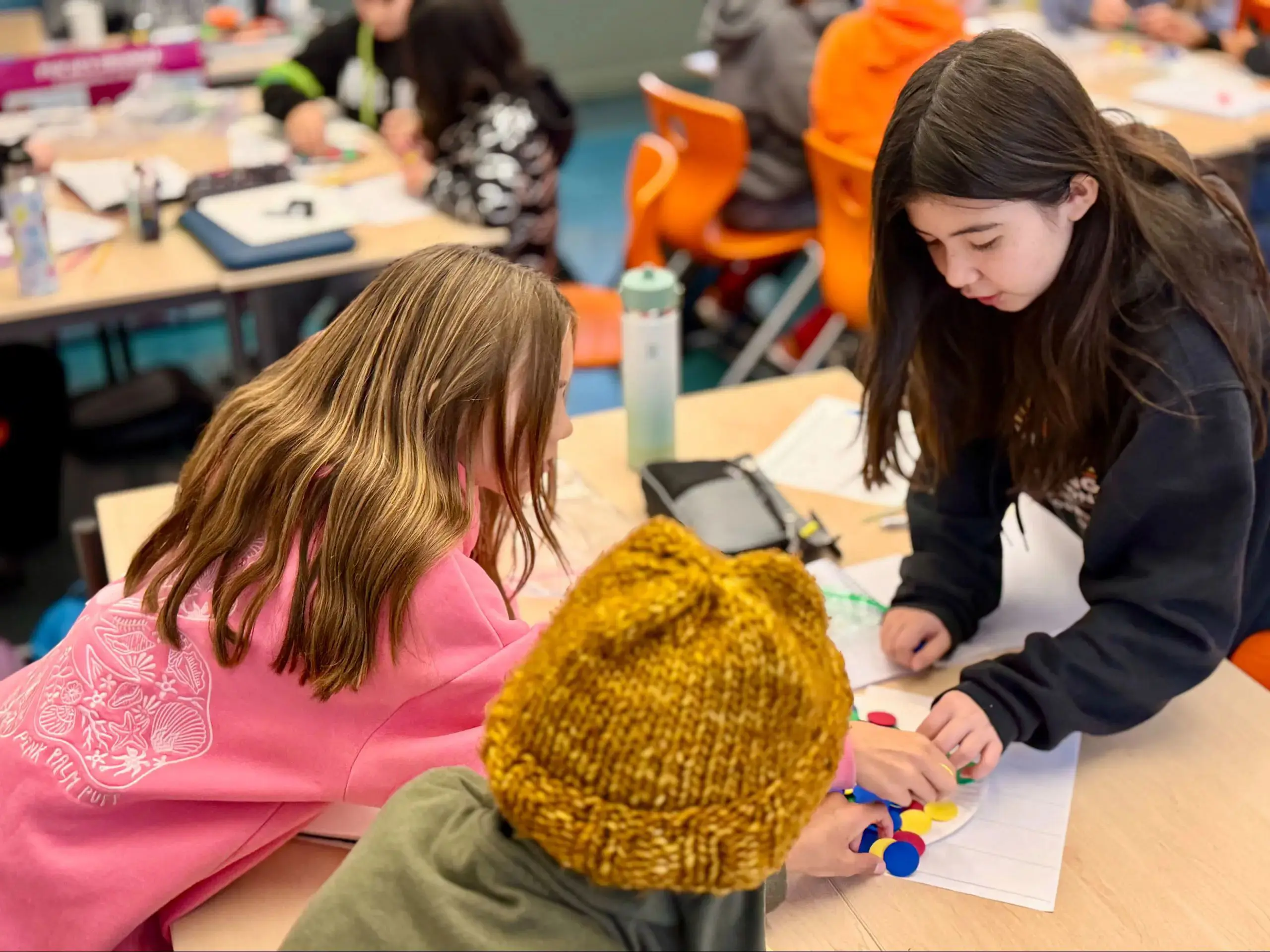
The Redwood Day math program creates learning environments that promote confidence, resiliency, and agency in order to prepare students for their next challenge in math. This is achieved by creating meaningful, relevant connections of math to students’ lives; encouraging students to meet challenges head-on, engage in productive struggle, and view errors as opportunities to learn; and promoting a balance of procedural fluency, structure, and abstract reasoning. In the Lower School, students build foundational skills and deep conceptual understanding through Math in Focus and the Singapore Math pedagogy. This approach emphasizes concept mastery, metacognitive reasoning, and a concrete-pictorial-abstract progression that utilizes visual model drawing to solve complex, real-world problems. Teachers bring these concepts to life through hands-on exploration with multi-sensory manipulatives, dynamic math games, and project-based learning. Instruction is differentiated through targeted small groups, with Beast Academy and Math in Focus providing tailored extensions and enrichment to ensure every student is appropriately challenged. |
| SOCIAL STUDIES |
Our Lower School social studies curriculum builds a foundation for understanding our shared humanity and the complex systems that shape our world. Through an inquiry-based approach, students transition from personal reflection to global awareness. The journey begins in kindergarten and first grade by exploring the concepts of self, family, and diverse cultural traditions. As students progress into second and third grade, they examine individuals who make a difference, diving deeply into history and local activism within the Bay Area and beyond. In fourth and fifth grade, the lens expands to California history and a comprehensive study of United States history and government, culminating in critical investigations into how history is constructed and whose voices are represented.
The social studies curriculum is driven by active application and framed around essential questions that challenge students to think deeply and empathetically. Throughout their lower school years, students grapple with what makes an inclusive community, an individual’s responsibility to others, and the profound resilience demonstrated throughout history. By investigating how the past informs the present, why multiple perspectives matter, and ultimately asking, "What is history and who writes it?", our students develop the critical-thinking skills and cultural competence necessary to become active, informed citizens. |
| SEL |
At Redwood Day, we are committed to meeting the needs and fostering the growth and development of the whole child, which encompasses academics and social-emotional learning (SEL). Our commitment to SEL reflects our understanding that self-awareness, identity, and developmentally appropriate support are fundamental to student success. Through transformative SEL, grounded in culturally responsive instruction, we empower our students to develop the skills needed to thrive in a diverse and interconnected world. Our goal is to equip every student with the tools to become global citizens, capable of resolving conflicts, advocating for themselves, understanding the perspectives of and empathizing with others, and contributing positively to their communities.
Social-emotional learning in the Lower School includes nurturing and teaching valuable social and life skills for good character (respect, concern for others, problem-solving, accountability, contribution, and cooperation). Every day starts with a morning meeting to build community, get oriented to the school day, and invite students to learn by doing. Students learn to use their voice, to practice looking at issues from multiple points of view, to see strengths in themselves and others, and to influence others in socially useful ways. Students engage in appropriate restorative practices when behavioral infractions occur to help them be accountable for and understand the impact of their actions, and provide them with an opportunity to repair any harm they may have caused in the community. |
| WORLD LANGUAGES |
Redwood Day offers language learning in Mandarin and Spanish tailored for students acquiring an additional language without native fluency. We believe that language has the capacity to connect people and communities through communication and developing an appreciation for other viewpoints and cultures. Guiding this belief is a world language program rooted in cultivating a life-long appreciation and enthusiasm for languages and the cultures they represent. Empowering students to communicate in the target language supports this vision for world language learning while partnering with students as they begin their language acquisition journeys. In the Lower School, language acquisition begins with an introduction designed to spark curiosity and cultural appreciation. During kindergarten and first grade, students experience a full semester of both Mandarin and Spanish, allowing them to explore each language. Beginning in second grade, students choose one of these languages to study continuously as a year-long course throughout the remainder of their time at Redwood Day. World language instruction at Redwood Day is grounded in a proficiency-based model that prioritizes practical, real-world communication skills. Guided by the American Council on the Teaching of Foreign Languages (ACTFL) scale, our curriculum uses benchmarks—ranging from Novice-Low to Intermediate-Low—to help teachers and students measure and celebrate tangible progress. Reflecting the distinct linguistic structures of each language and the time dedicated to World Languages learning, our target goals for the end of fifth grade are the Novice-High range for Spanish and the Novice-Mid range for Mandarin, ensuring students leave the Lower School with a strong, confident foundation. |
| SCIENCE |
The science program at Redwood Day aims to foster a spirit of inquiry by nurturing innate curiosity and bridging the gap between the classroom and the real world. Through hands-on investigations and the study of natural phenomena, students acquire and apply essential science and engineering practices while exploring the intersections of science and identity. We believe that science is a human endeavor, enriched by inclusive perspectives and a curriculum that reflects diverse voices and ways of knowing. By examining the human impacts of scientific discovery—both historical and contemporary—our aim is to equip learners with the knowledge and empathy to serve as stewards of the planet, empowering them to drive positive change within their communities and the world.
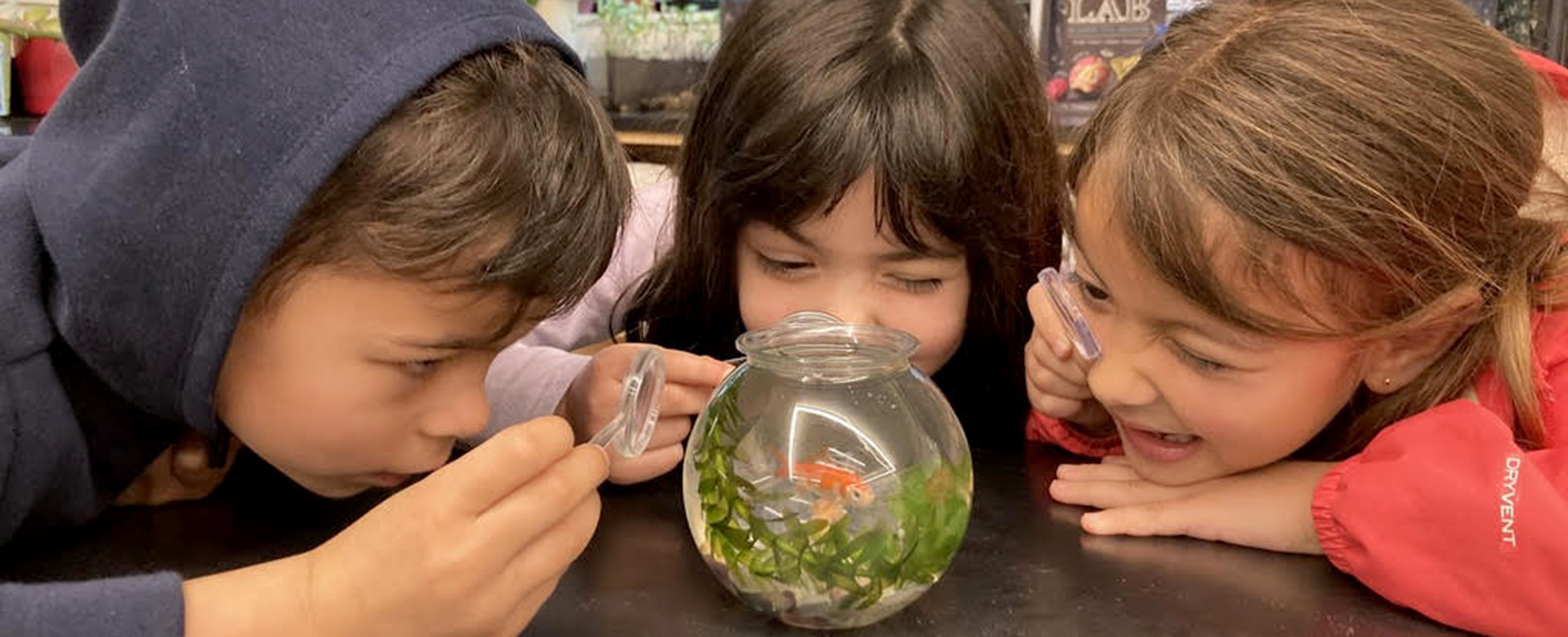
In the Lower School, through inquiry-based learning and hands-on investigations utilizing the FOSS (Full Option Science System) curriculum—developed by the Lawrence Hall of Science at UC Berkeley—our young scientists dive deeply into the core dimensions of Earth and space sciences, life science, and physical science. The year culminates with multidisciplinary STEAM projects that are proudly showcased at Redwood Day’s annual STEAM Fair. |
| PE |
Redwood Day recognizes the value of physical activity for health, enjoyment, challenge, self-expression and social interaction and believes that physical education is an integral part of developing the whole child. Through learning experiences in physical education, students develop motor skills and use their knowledge of movement concepts, tactics, and strategies across a variety of environments.
They apply knowledge of health-related and skill-related fitness to enhance their overall well-being, and they develop the social skills necessary to exhibit empathy and respect for others and foster and maintain relationships. In addition, students develop skills for communication, leadership, and conflict resolution in a variety of physical activity settings, all contributing to an individual’s physical literacy journey.
In the Lower School, students engage in a wide variety of activities and games designed to promote good health, self-awareness, and confidence. At this stage, participation, cooperation, and sharing are integral components of the learning process, as is greater self-responsibility. Students are encouraged to embrace challenges and learn from their experiences while developing skills of teamwork, communication, and a sense of fair play. |
| GARDEN TO TABLE |
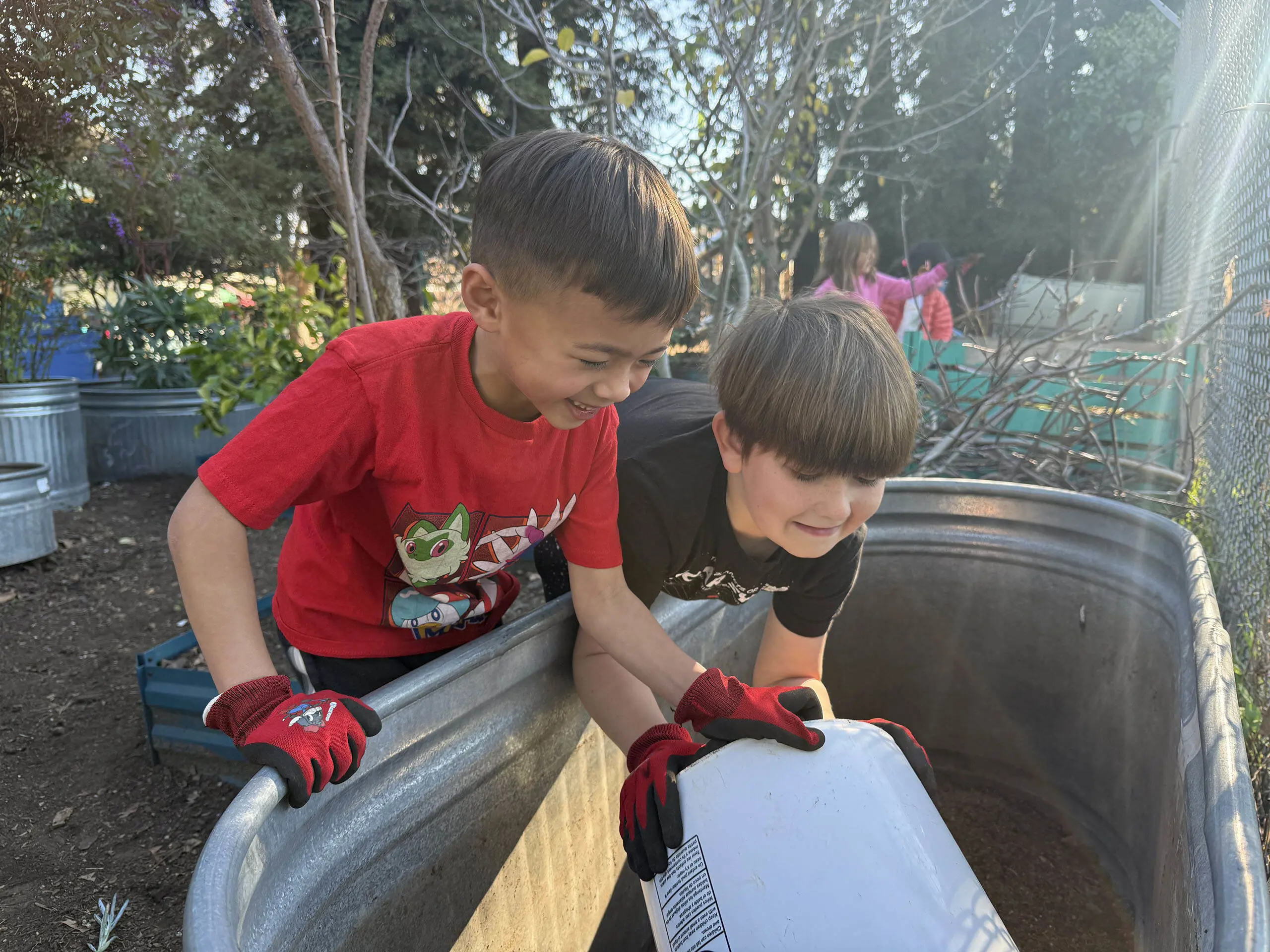
The Lower School Garden to Table program creates curious growers and eaters by promoting intentional interactions with the natural world. It develops in students empathy for animal and plant life where students become community stewards and responsible global citizens. The program provides hands-on opportunities where young cooks and gardeners cultivate curiosity by exploring garden beds, kitchen spaces, and animal homes to grow as lifelong learners. The Garden to Table classroom is an indoor/outdoor space where all learners have access and agency, and where cross-disciplinary connections make learning multi-dimensional. Students actively engage in the full cycle of planting, nurturing, and harvesting a variety of edible plants. As both gardeners and cooks, they observe the interconnectedness of our food systems, care for garden habitats, and learn practical knife and cooking skills to prepare recipes that directly connect to their core curriculum. |
| LIBRARY/INFORMATION LITERACY & DIGITAL CITIZENSHIP |
The Lower School library program and space invites students to explore ideas and interests, gather and enjoy individual and communal activities, engage in inquiry and research that supports the curriculum, and experience the joy of reading. Lower School students attend library classes once every eight-day cycle where they are exposed to rich, diverse texts, have the opportunity to explore and select books, and learn the fundamentals of information literacy as part of a developmental continuum.
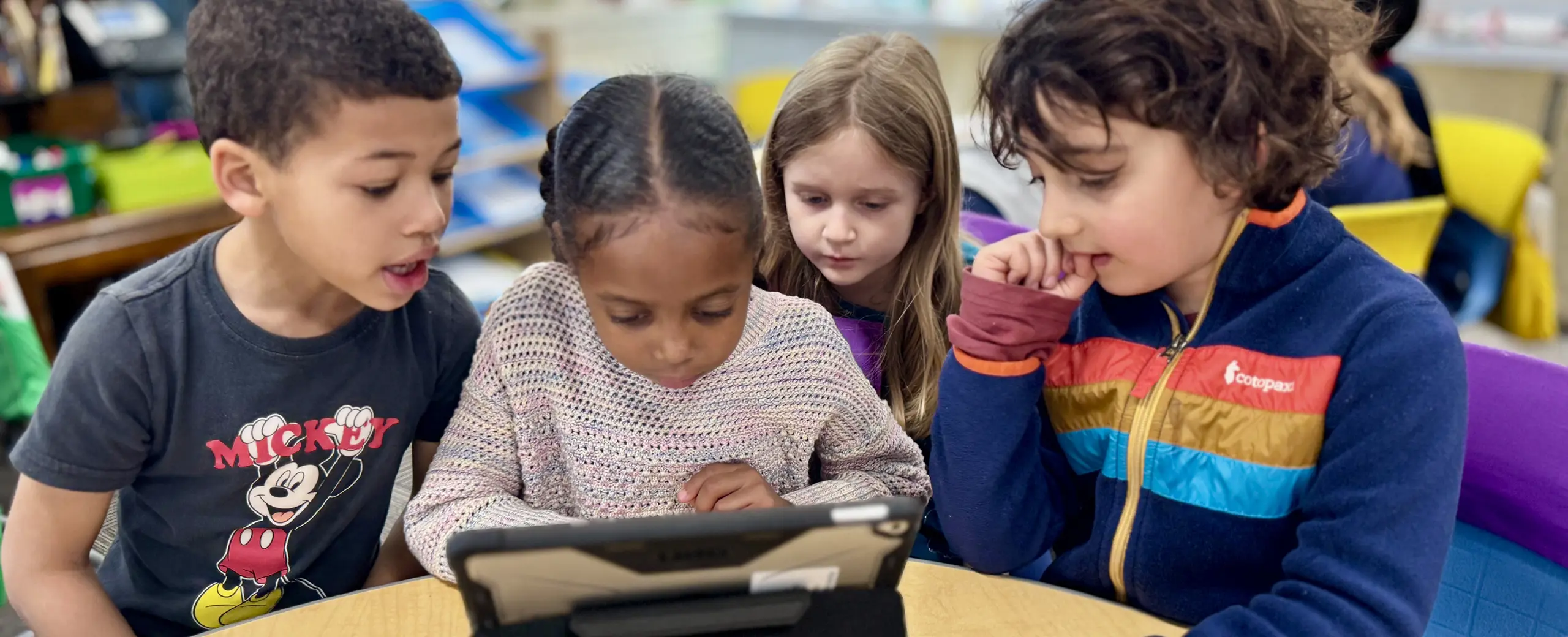
Students gain important digital citizenship skills and learn responsible, safe, and healthy use of technology and AI through classes taught by our technology specialist in the core classroom. |
| ART |
The Redwood Day Visual Arts program engages students in authentic creative processes where they learn to look closely, see clearly, and perceive differently. Instruction is fluid and philosophically rooted in the idea that all children are artists and that growth comes from continuous practice, experimentation, and reflection. Students explore diverse artists, forms, and artistic genres while gaining a lifelong appreciation, understanding, and engagement with visual arts. In Lower School art, students explore their creativity through diverse mediums and study artists from wide-ranging backgrounds, guided by year-long, developmentally aligned themes. The journey begins with open exploration and material discovery in kindergarten, moves into visual storytelling in first grade, and shifts toward self-directed intentionality with color and shape in second grade. As their observational skills grow, third graders focus on capturing environmental patterns and textures, while fourth graders learn to create depth through space and perspective. Culminating in fifth grade, students harness their capacity for abstract thinking to express personal identity, emotions, and social messages, beautifully preparing them for the middle school art experience. |
| MUSIC |
Redwood Day School's music program inspires a love of music in all students. Through critical listening, composition, and performance of a diverse repertoire, students develop musical skills while exploring a variety of genres and traditions. Within this framework, students are encouraged to embrace their own cultures and identities as well as others. The culmination of the K-8 music program is to foster a deep, life-long curiosity and appreciation of music and to provide students with the tools to express themselves musically.
In the Lower School, students experience a dynamic music curriculum where they learn through movement, exploration of songs from diverse cultures, through cross-disciplinary links, and literature connections. They engage in musical expression using a variety of instruments—including voice, Orff/barred instruments, the recorder, and the ukulele.
Beginning with movement, singing games, and basic notation in kindergarten and first grade, students progressively deepen their music literacy through second and third grade by composing music and playing the recorder. By fourth and fifth grade, this foundational knowledge culminates in advanced vocal techniques, treble staff reading, ukulele instruction, and collaborative performances that prepare students for lifelong artistic engagement. |
| DESIGN, BUILD, INNOVATE |
The Design Build Innovate (DBi) program nurtures purpose-driven, resilient creators who use curiosity, empathy, and courageous risk-taking to design inclusive solutions. Through a blend of analog and digital tools, students creatively collaborate to solve complex problems while remaining mindful of the impact of their design choices. This hands-on journey evolves by grade level to build foundational technical and critical thinking skills:
|
| EQUITY AND BELONGING |
Redwood Day is dedicated to creating an equitable learning environment for all students: we want every child to be seen and heard, feel safe and valued, and experience belonging. We want students to see, hear, support and value themselves and others while fostering active allyship throughout their educational journey. As a result, DEIB is a critical part of students’ academic and social emotional growth.
Lower School students focus on exploring and celebrating identity and diversity and learning about themselves and others. As students move through the Lower School program, they further recognize and understand different abilities, perspectives, stereotypes, and the roles of intersectional identity and privilege. Through our K-8 Equity and Inclusion Groups, we’ve created dedicated time during the school day for students, faculty, and staff to engage in intentional discussions about diversity, equity, inclusion, and belonging. |
| SUPPORT SERVICES |
In the Lower School, student care is synchronized by a dedicated, multidisciplinary team comprising the Lower School Director, the School Counselor, the Director of Student Life/Dean of Students, our Lower School Coordinator, and our Learning and Reading Specialists. For students with documented learning plans, this team ensures accommodations and differentiation strategies are woven seamlessly across the program. Learning and reading specialists utilize targeted small-group pull-outs and classroom push-ins, partnering directly with teachers to deliver tailored instruction that supports every child's unique growth.
Additionally, the Lower School features Explorers, an enrichment program designed to serve and challenge gifted and twice-exceptional (2e) students, ensuring their unique intellectual and creative needs are met. |
Explore our LS academic programs in our K-5 grade level curriculum guides