LOWER SCHOOL CURRICULUM
KINDERGARTEN
| ENGLISH LANGUAGE ARTS |
In Kindergarten, students learn Approaches to Teaching and Learning in English Language Arts
|
| WORLD LANGUAGE |
The World Language program at this early stage aims to spark students’ interest in learning a new language by exposing them to a variety of topics. This includes basic greetings, counting, basic colors, basic body parts, and commonly used verbs, presented through movement, stories, games, and multi-sensory activities, with cultural topics intertwined with language learning. Kindergarten students attend Mandarin or Spanish classes three times during an eight-day cycle, and each language is taught for one semester. Starting in second grade, students learn either Mandarin or Spanish across the entire school year. Approaches to Teaching and Learning in Spanish and Mandarin
|
| PHYSICAL EDUCATION |
Kindergarteners in PE engage in a wide variety of activities and games designed to promote good health, self-awareness, and confidence. At this stage, participation, cooperation, and sharing are integral components of the learning process, as is greater self-responsibility. Locomotor (jumping, running, etc.) and non-locomotor skills (stretching, twisting, etc.) provide the foundation for Kindergarten PE learning, with additional focus on manipulative skills, such as basic ball handling, that improve hand-eye coordination. Kindergartners have Physical Education three times during each eight-day cycle rotation. Approaches to Teaching and Learning in P.E.
|
| LIBRARY/INFORMATION LITERACY AND DIGITAL CITIZENSHIP |
The Lower School library program and space invite students to explore ideas and interests, gather and enjoy individual and communal activities, engage in inquiry and research that supports the curriculum, and experience the joy of reading. Lower School students attend library classes once every eight-day cycle, where they are exposed to rich, diverse texts, have the opportunity to explore and select books, and learn the fundamentals of information literacy as part of a developmental continuum.
Approaches to Learning in the Library/Information Literacy
|
| SOCIAL STUDIES |
In Kindergarten Social Studies, students explore and celebrate similarities and differences in identity, focusing on family structure, race, culture, and gender. Students also expand their social world by establishing pen-pal relationships with another kindergarten class to make connections in the community. Through our "A Life Like Mine" project, we honor one student each week by learning all about their inner and outer worlds. Approaches to Teaching and Learning in Social Studies
|
| MUSIC |
In Kindergarten Music, students develop their general musical ability through an introduction to a wide range of musical concepts. Call-and-response and echo songs used to develop pitch matching, along with singing games from different cultures, provide opportunities for students to sing alone and with others. Kindergarten students also learn rhythmic play with unpitched percussion and body percussion, as well as listening skills. Kindergartners have Music twice during each eight-day cycle. Approaches to Teaching and Learning in Music
|
| MATHEMATICS |
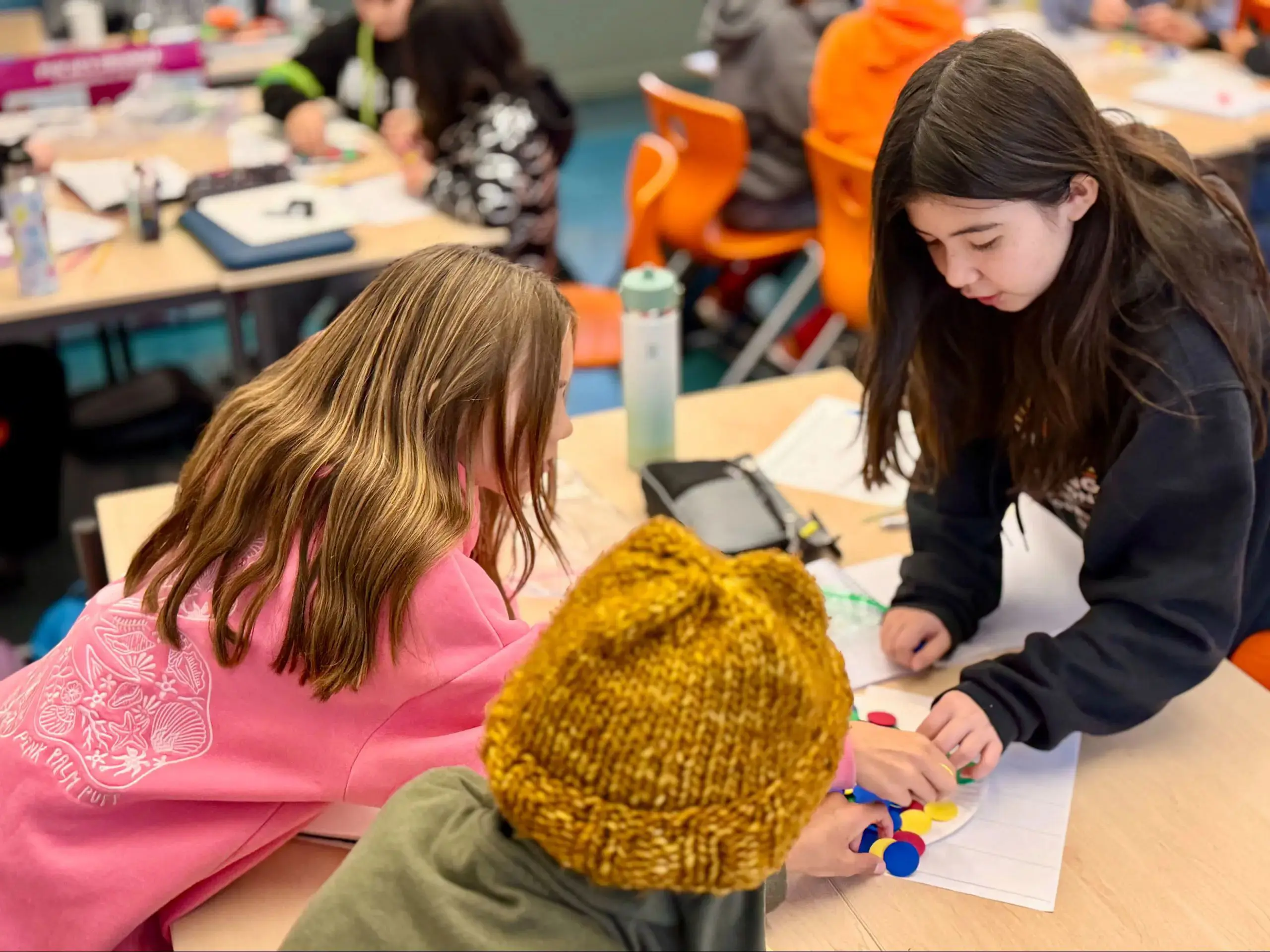
In Kindergarten, students continue to develop their foundational math skills. These skills are developed through the pedagogy of the Singapore Math framework, which emphasizes concept mastery, a concrete-pictorial-abstract approach, metacognitive reasoning, and the use of model drawing to solve problems. Mathematical concepts and topics addressed in Kindergarten include manipulating numbers, basic math vocabulary, counting, recognizing patterns, and solving basic math problems. At this level, students explore math concepts in multisensory ways through differentiated small-group instruction and centers that feature manipulatives. Approaches to Teaching and Learning in Math
|
| DESIGN, BUILD, INNOVATE |
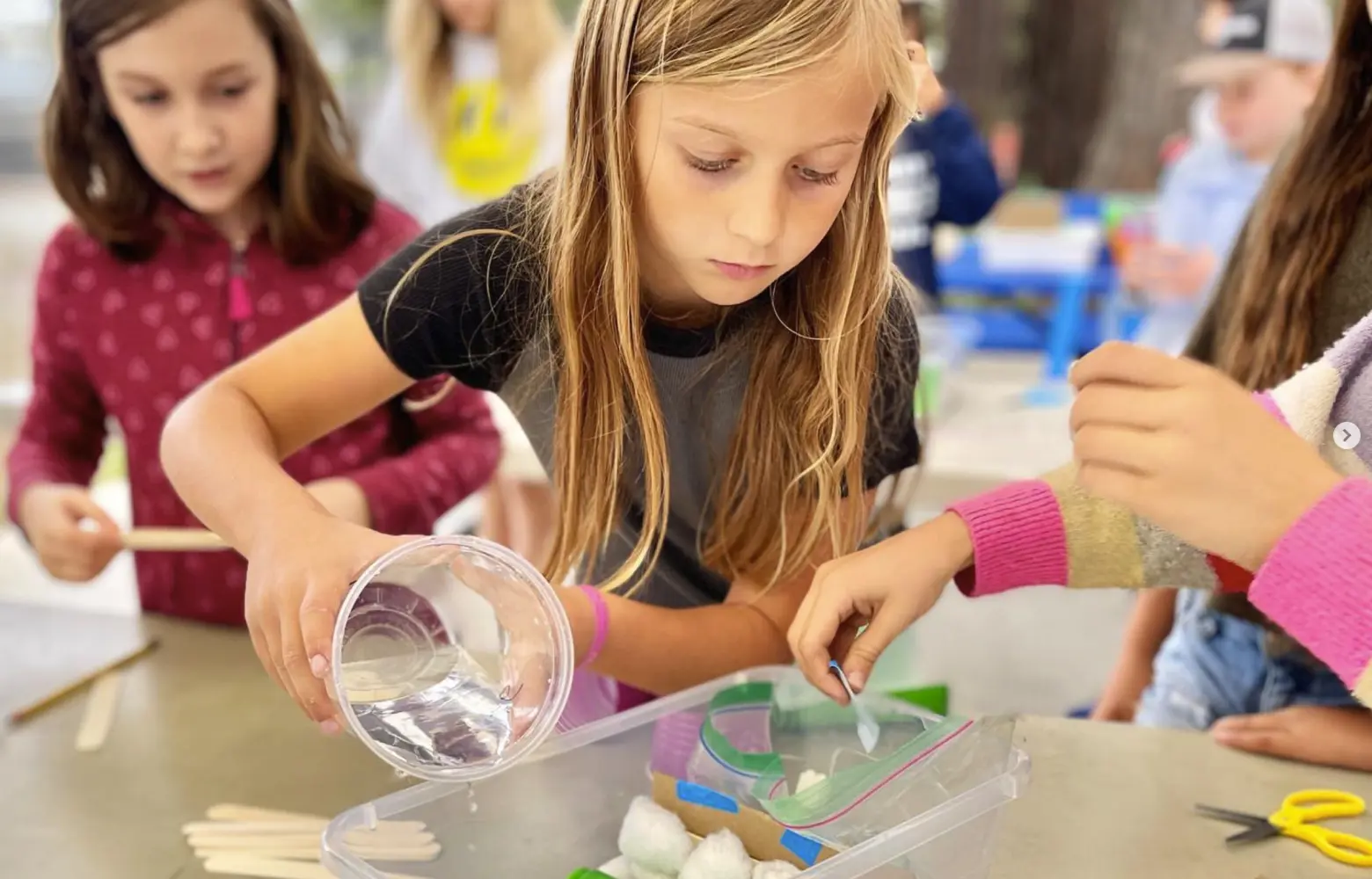
In Kindergarten DBi, students practice designing and building to develop their inner creative and collaborative designer. Students explore form, function, and imagination through engaging in engineering challenges, such as building with different materials. Students work in the DBi lab ten times within a semester of learning. Approaches to Teaching and Learning in DBi
|
| GARDEN TO TABLE |
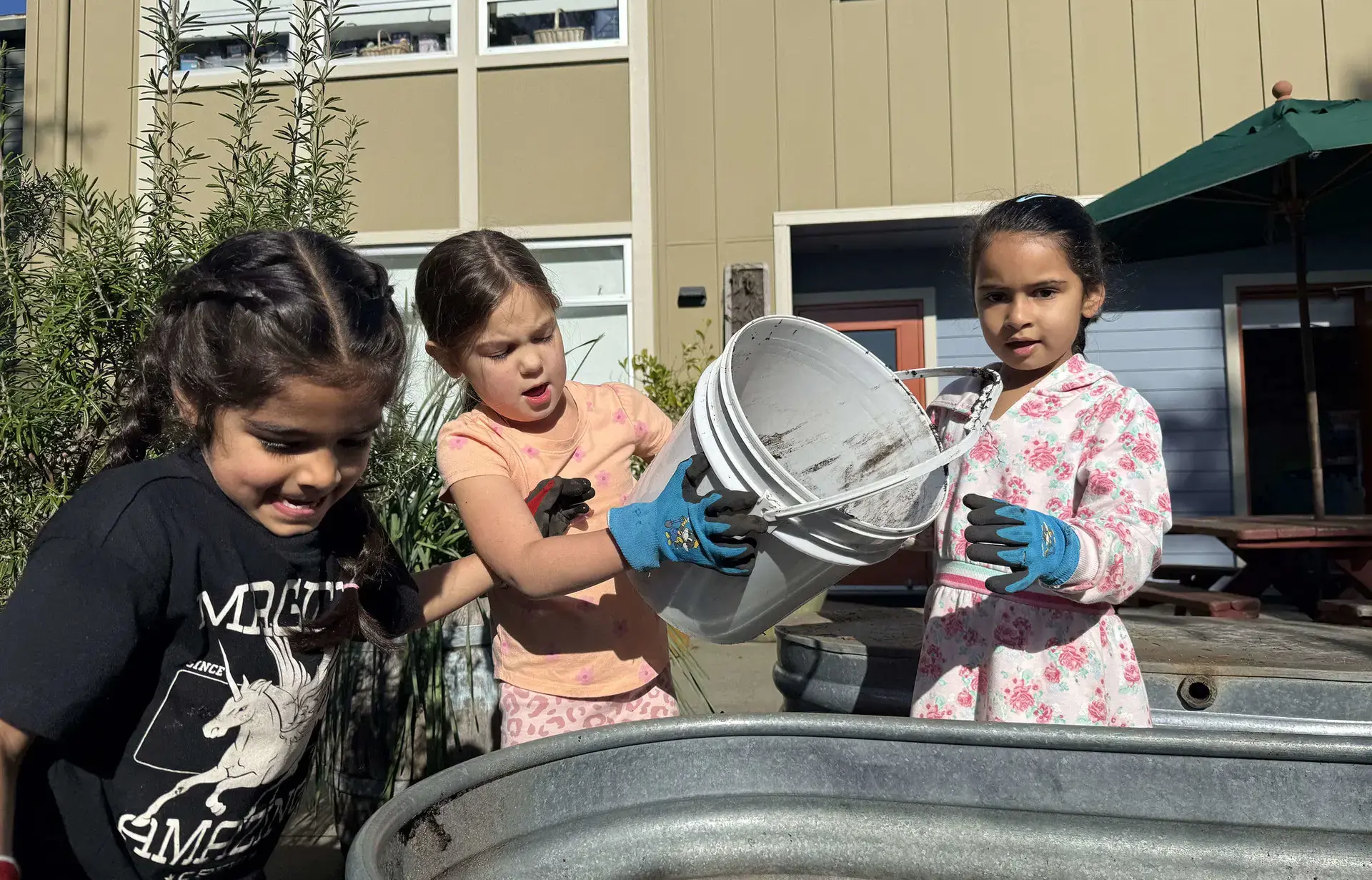
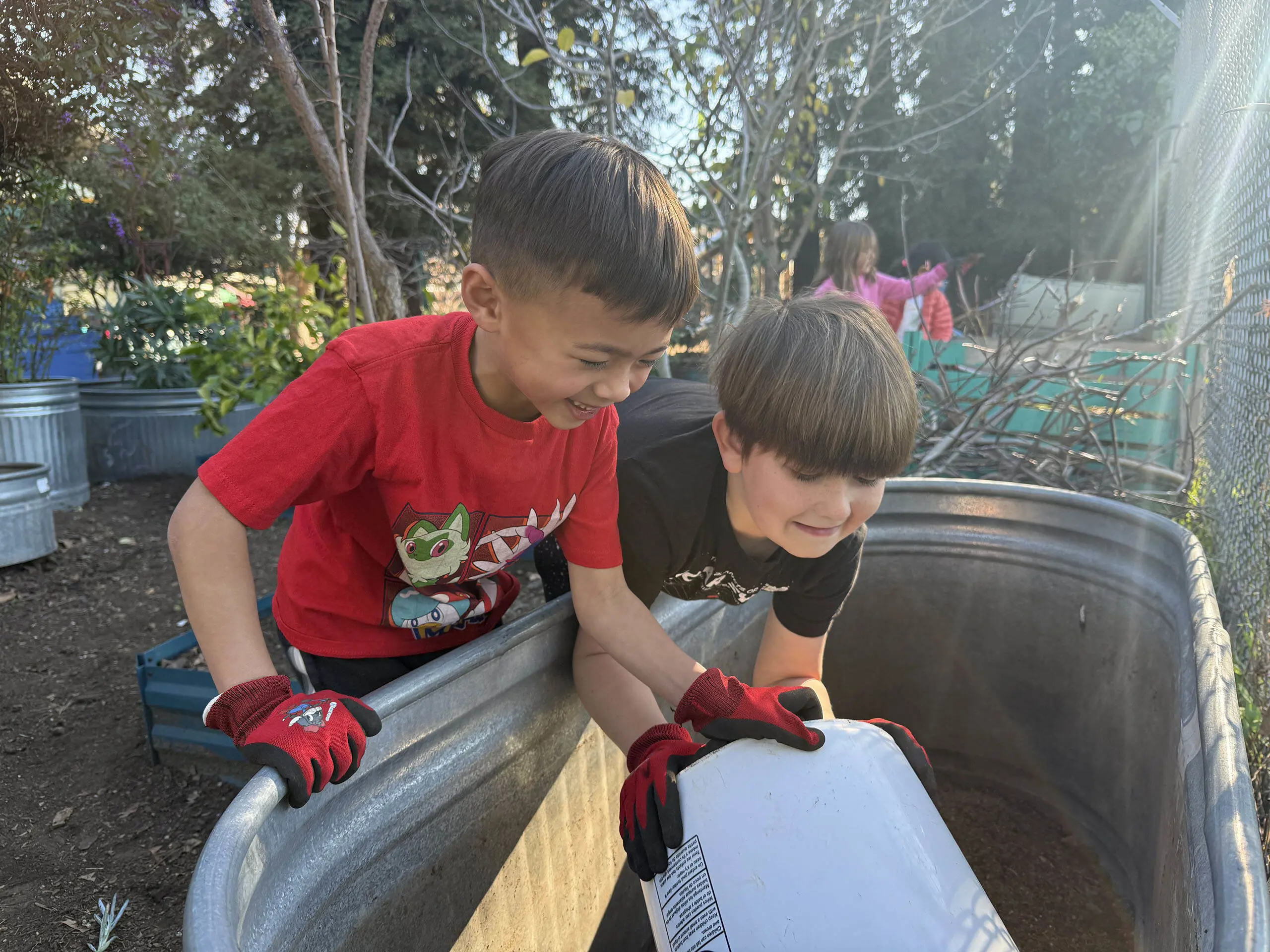
In Kindergarten Garden to Table, cooks and gardeners learn that our food system is all connected, and they observe the life cycles of animals and plants. Beginning cooks learn knife skills and identify the five senses while engaging with making and growing food in projects that connect with the core classroom. The Garden to Table classroom connects across all disciplines in an indoor/outdoor space where all learners have access and agency to make learning multi-dimensional. Kindergarteners learn in the garden once during each eight-day cycle rotation and engage in cooking throughout the year in sessions coordinated with the core classroom. Approaches to Teaching and Learning in Garden to Table
|
| DIVERSITY, EQUITY, INCLUSION, & BELONGING |
In Kindergarten, DEIB concepts are developed across the curriculum, including within Social Emotional Learning and Morning Meetings, and within Equity and Inclusion groups that focus on developing students’ identities and their roles within the Redwood Day community. Students learn to speak from the "I" perspective and understand similarities and differences among their peers. They examine the difference between equality and equity and share experiences from their lives. Kindergarteners explore themes such as family, racial and gender identity, "inside" and "outside" me, and also become comfortable sharing and celebrating our pronouns. DEIB learning aligns with the Learning for Justice Anti-Bias Framework and Social Justice Standards. Approaches to Teaching and Learning in DEB
|
| SCIENCE |
In Kindergarten Science, through hands-on discovery and investigation, students use their senses of sight, touch, and sound to answer questions about science: What happens when you push or pull on an object? Where do animals live and why do they live there? What is the weather like today, and how is it different from yesterday? Students also explore the use of natural resources and the importance of their preservation. Instruction is led by hands-on investigations using the Full Option Science Systems (FOSS). Kindergarteners have science twice during the eight-day cycle. Approaches to Teaching and Learning in Science
|
| ART |
Lower School Art is where students explore and express their creativity through a variety of mediums and study artists from diverse backgrounds. At the Kindergarten stage in Art, students explore materials and basic art-making tools. The theme “Learning through Exploration” focuses on allowing children the freedom and space to discover, while offering a structure for growth. Kindergarteners engage in coloring, mixing, exploring textures, basic collage assembly, molding clay, and other process-driven activities. Yayoi Kusama, Nnenna Okore, and Alma Thomas are among the many artists students will draw inspiration from during the school year. In Kindergarten, students also learn to use and care for art tools and the art studio. Kindergartners have Art twice during each eight-day cycle. Approaches to Teaching and Learning in Art
|