LOWER SCHOOL CURRICULUM
SECOND GRADE
| ENGLISH LANGUAGE ARTS |
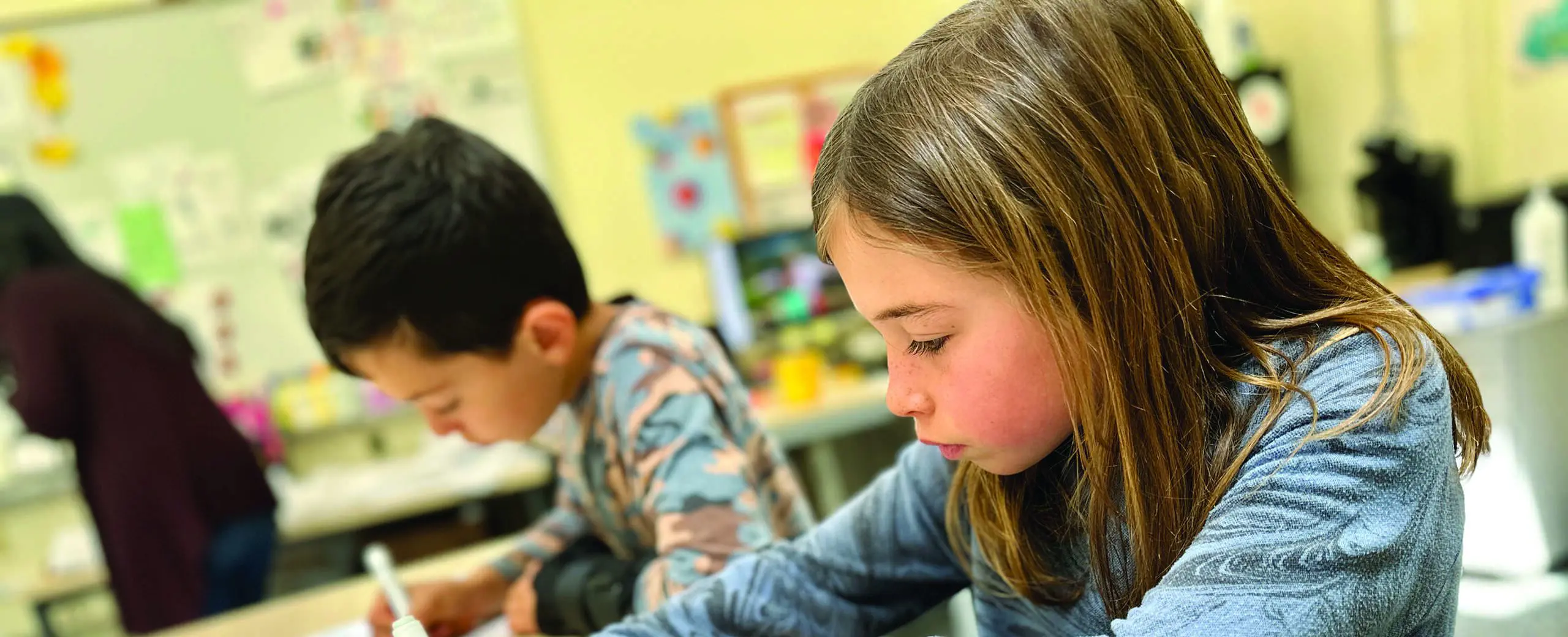
Second graders, in English Language Arts, build on foundational reading skills, develop fluency and expression, and build their comprehension skills and strategies including comparing and contrasting, determining the main idea, and inferring. In book club groups, students engage in discussions about individual books where they gain exposure to rich texts and develop literate lives. Second graders delve further into the writing process where their writing becomes longer and more organized as they learn to develop and structure their ideas. At this level, students begin to locate information from reference materials to generate written reports and oral presentations. Fostering an appreciation for poetry is also a component of English Language Arts in Grade 2. Second graders are additionally introduced to keyboarding and learn to write in cursive. Approaches to Teaching and Learning in English Language Arts
|
| WORLD LANGUAGE |
Grade 2 Spanish Grade 2 Mandarin Approaches to Teaching and Learning in Spanish and Mandarin
|
| PHYSICAL EDUCATION |
Second graders, in PE, are encouraged to embrace challenges and learn from their experiences while developing skills of teamwork, communication, and a sense of fair play. At this level, students become proficient in fundamental manipulative, locomotor (running, hopping, skipping), and non-locomotor (bending, twisting, turning) skills. This age group is also beginning to understand the benefits of physical activity for sustaining good health; thus, students engage in a wide variety of activities and games, all of which are designed to promote good health, confidence, and a physically active lifestyle. Second graders have Physical Education three times during each eight-day cycle. Approaches to Teaching and Learning in PE
|
| LIBRARY/INFORMATION LITERACY |
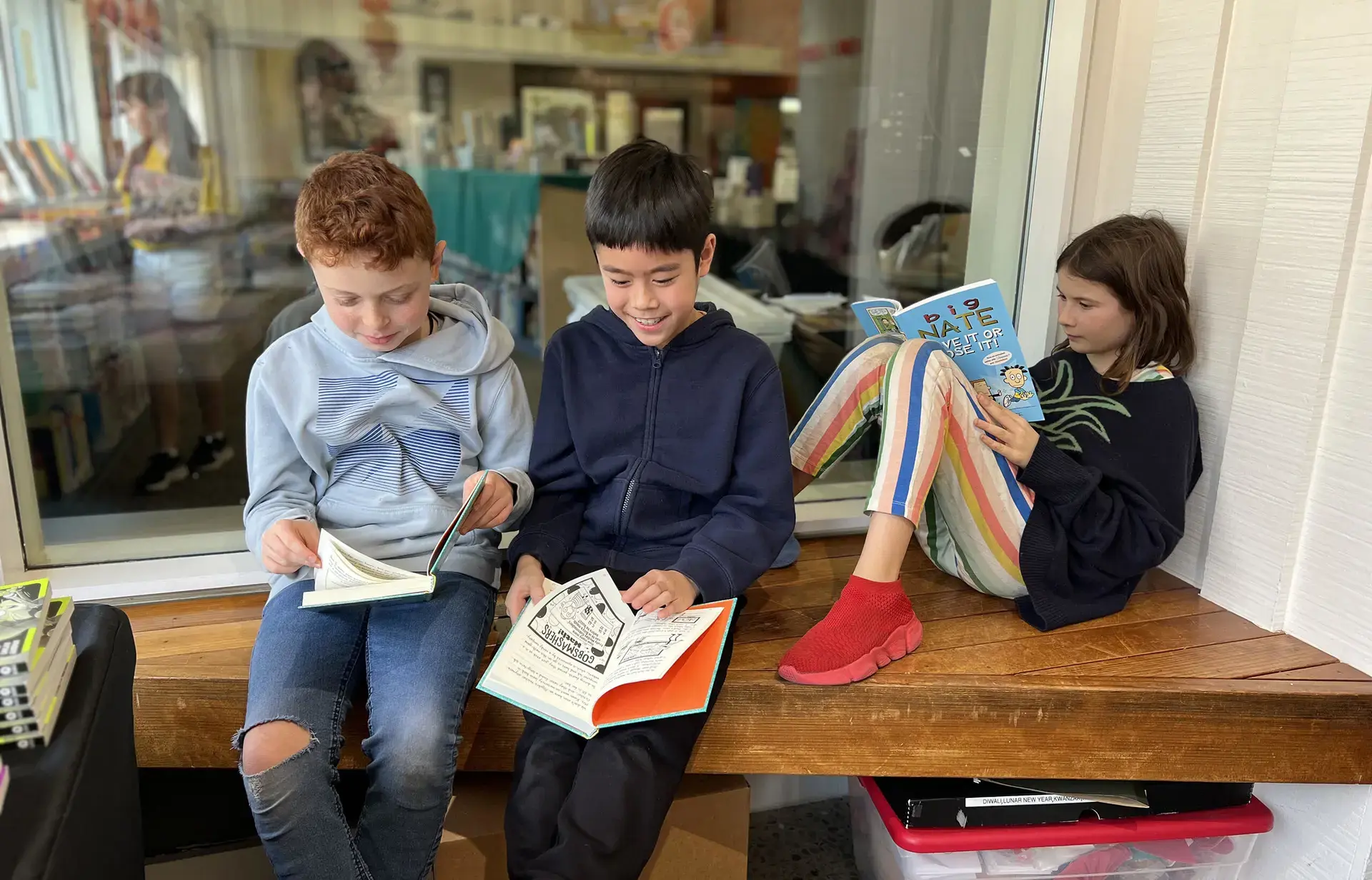
The Lower School library program and space invites students to explore ideas and interests, gather and enjoy individual and communal activities, engage in inquiry and research that supports the curriculum, and experience the joy of reading. Lower School students attend library classes once every eight-day cycle where they are exposed to rich, diverse texts, have the opportunity to explore and select books, and learn the fundamentals of information literacy as part of a developmental continuum. Our second graders gain important digital citizenship skills and learn responsible, safe, and healthy use of technology through once-a-month classes taught by our technology specialist in the core classroom. Approaches to Learning in the Library/Information Literacy
|
| SOCIAL STUDIES |
In second-grade social studies, students explore cultures and traditions, their local Oakland community, citizenship, and map-reading skills. Additionally, students explore identity through the study of influential people throughout history. Learning and exploration occur through a multi-modal, interdisciplinary approach that includes integrating reading, art, discussion, media, and hands-on experiences, including field trips. Approaches to Teaching and Learning in Social Studies Inquiry and essential questions:
|
| DESIGN, BUILD, INNOVATE |
Second grade students build on their DBi learning in first grade to go deeper into the design thinking process in the DBi Lab. They learn about the engineering design cycle as they engage in engineering challenges such as a tower building challenge, an earthquake safe building challenge, and a design thinking project where builders and innovators use skills of empathy to design, plan, and build a lunch box. Students work in the DBi Lab ten times within a semester of learning. Approaches to Teaching and Learning in DBi
|
| MATHEMATICS |
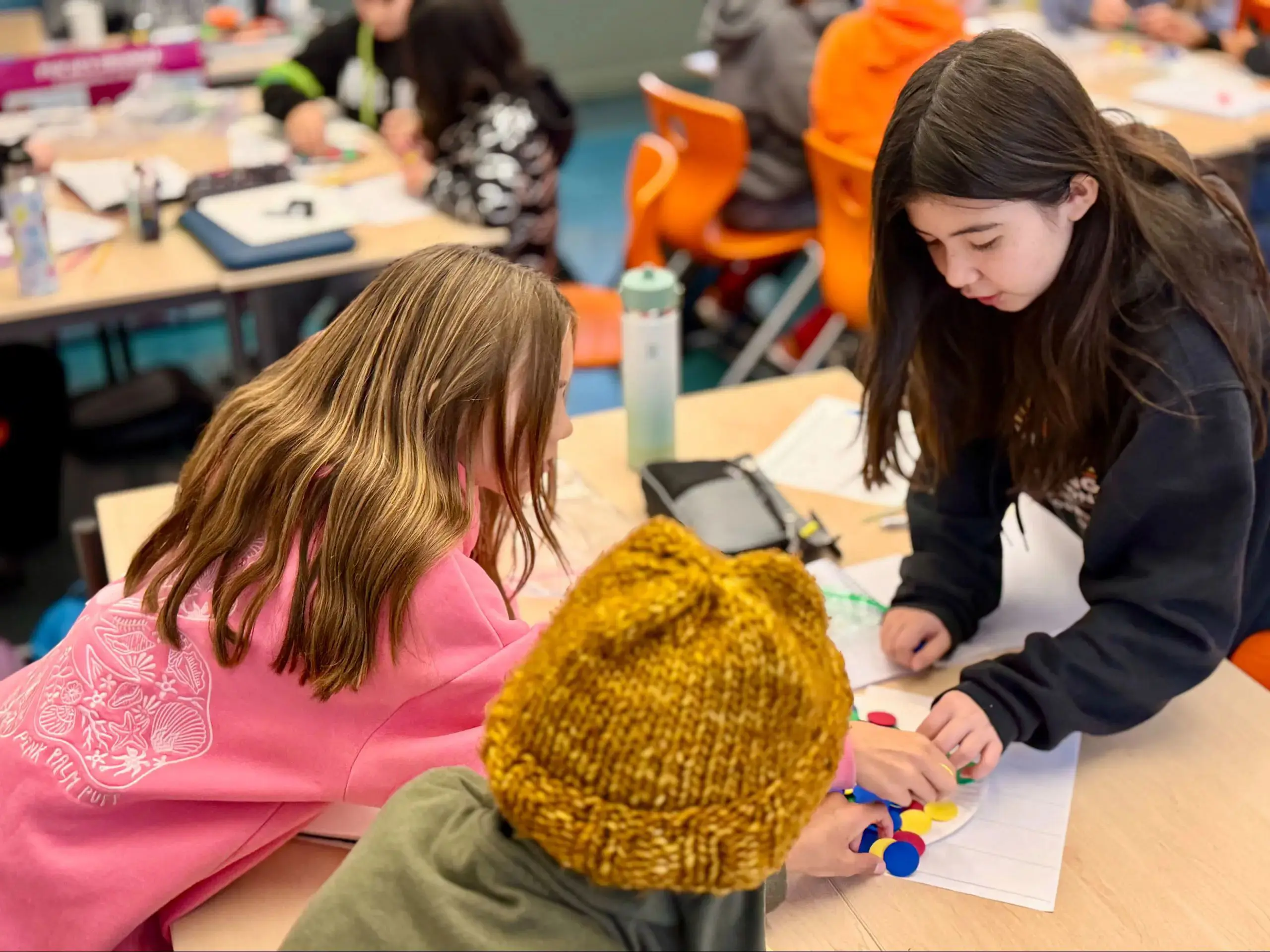
In Grade 2 Math, students build upon their knowledge and mathematical skills. This knowledge and skill is developed through the pedagogy of the Singapore Math framework through the Math in Focus curriculum, which emphasizes concept mastery, a concrete-pictorial-abstract approach, metacognitive reasoning, and the use of model drawing to solve problems and justify solutions. Math learning at this level emphasizes triple-digit addition and subtraction, problem solving, measurement using the metric and customary systems, and an introduction to multiplication and division. Concepts and skills are developed through hands-on instruction and practice. Approaches to Teaching and Learning in Math
|
| ART |
Lower School Art is where students explore and express their creativity through a variety of mediums and study artists from diverse backgrounds. Learning is fluid and philosophically rooted in the idea that all children are artists and that growth comes from continuous practice, experimentation, and reflection. Second graders explore Mexican folk art, Asian American contemporary art and artists, Yayoi Kusama’s influence on fashion, and the collage artist, Romare Bearden. Students engage in a variety of art projects including creating animal sculptures and making collagraph prints, and they learn about the American artist and activist, Keith Haring. Second graders have Art two times during each eight-day cycle rotation. Approaches to Teaching and Learning in Art
|
| MUSIC |
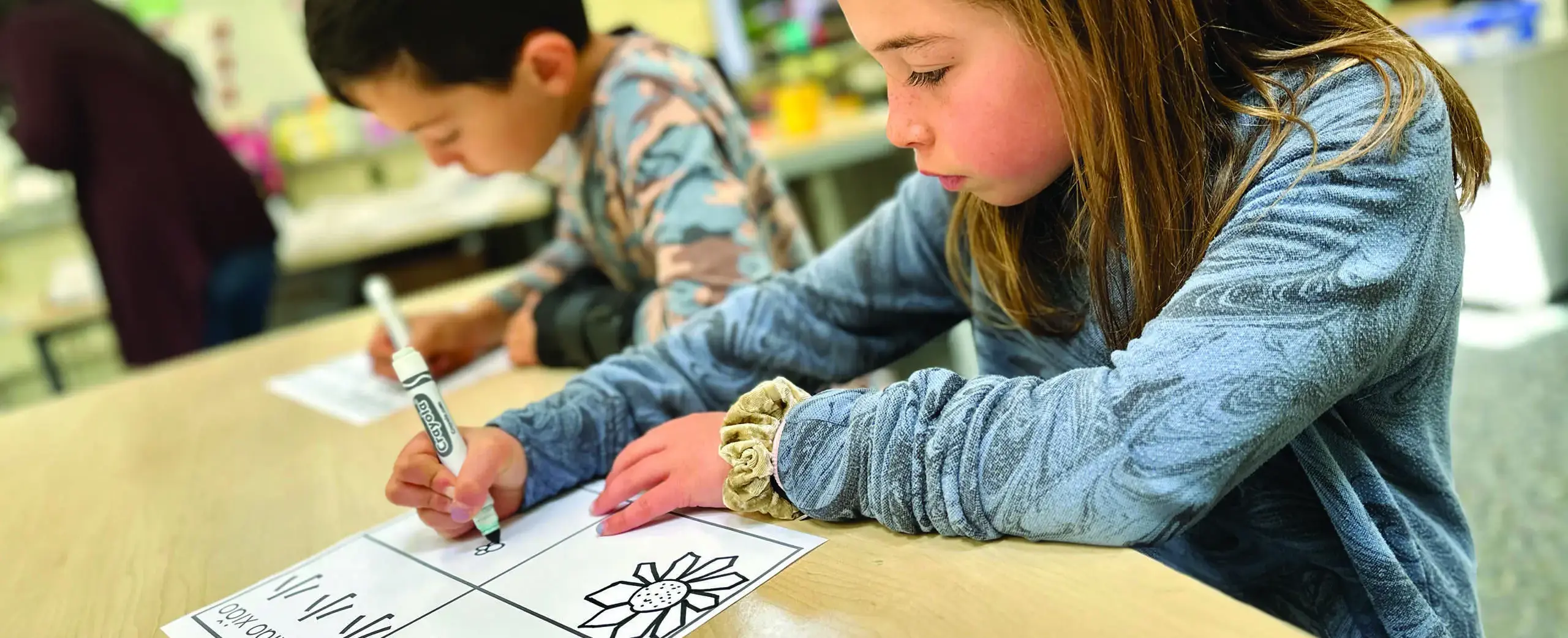
In music in second grade, creating, performing, and expressing music are integrated as students continue to develop the building blocks of music literacy. In each lesson they explore rhythm, melody, harmony, and form while exploring a diverse music repertoire through singing, playing instruments, dancing, and listening. Students read, write, and perform simple rhythmic patterns, such as ostinato, and begin to identify pitches through solfege and Curwen hand signs. Second graders also study rhythm, beat, and rhythmic values through stick notation which is used to compose rhythm combinations. Second graders have Music two times during each eight-day cycle rotation. Approaches to Teaching and Learning in Music
|
| SCIENCE |
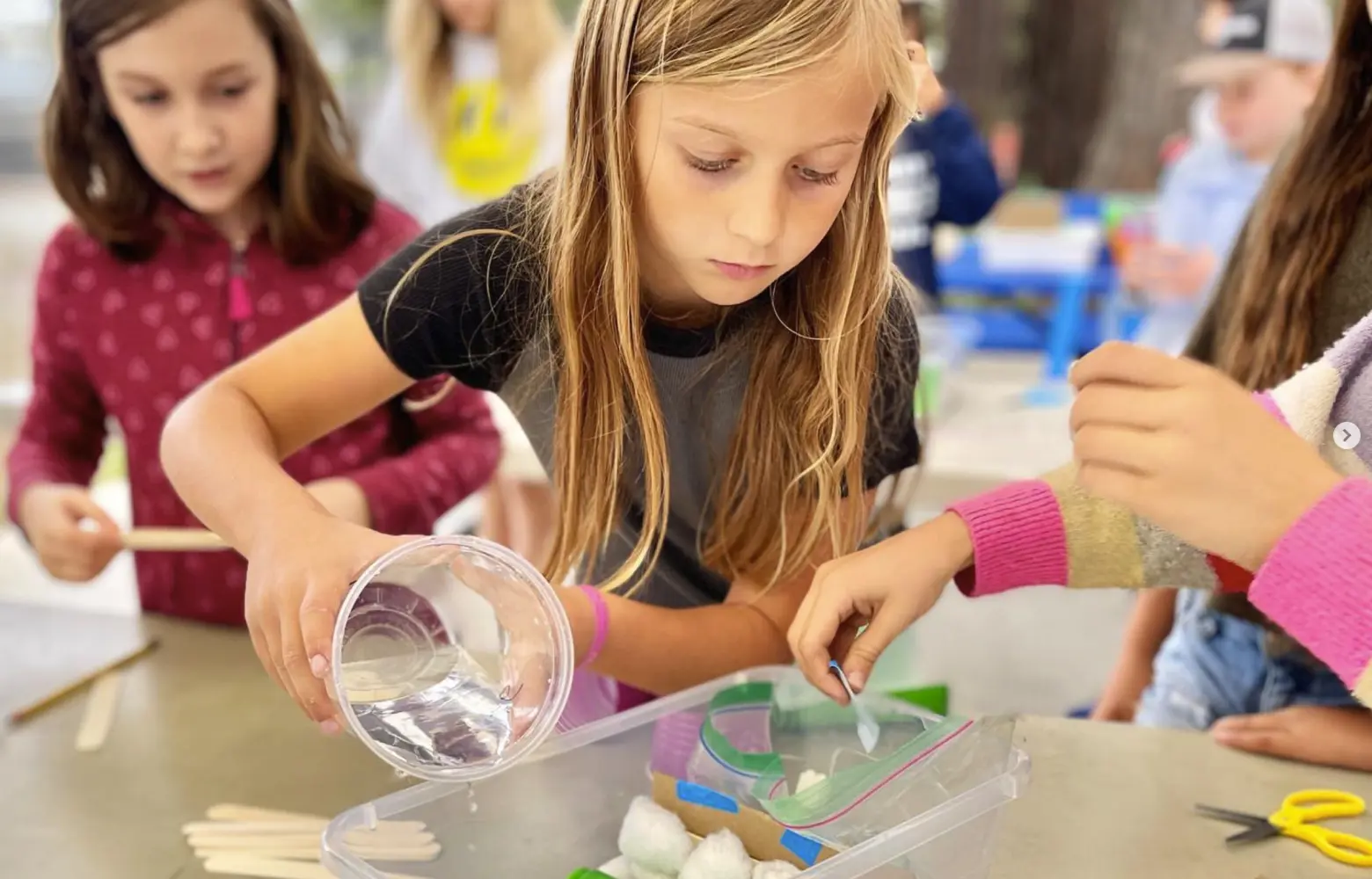
In science in Grade 2, students engage in science investigations where they pose questions, observe patterns and scientific phenomena, make predictions, and communicate what they observe with others. The science learning in second grade helps students formulate answers to questions such as: What are the properties of earth materials? What evidence do natural processes leave behind as they shape the Earth? How do the properties of solid and liquid materials relate to how they can be used and how they can change? What do plants need to grow? How do plants depend on animals? Learning is centered on hands-on investigations using the Full Option Science Systems (FOSS) materials. Approaches to Teaching and Learning in Science
|
| GARDEN TO TABLE |
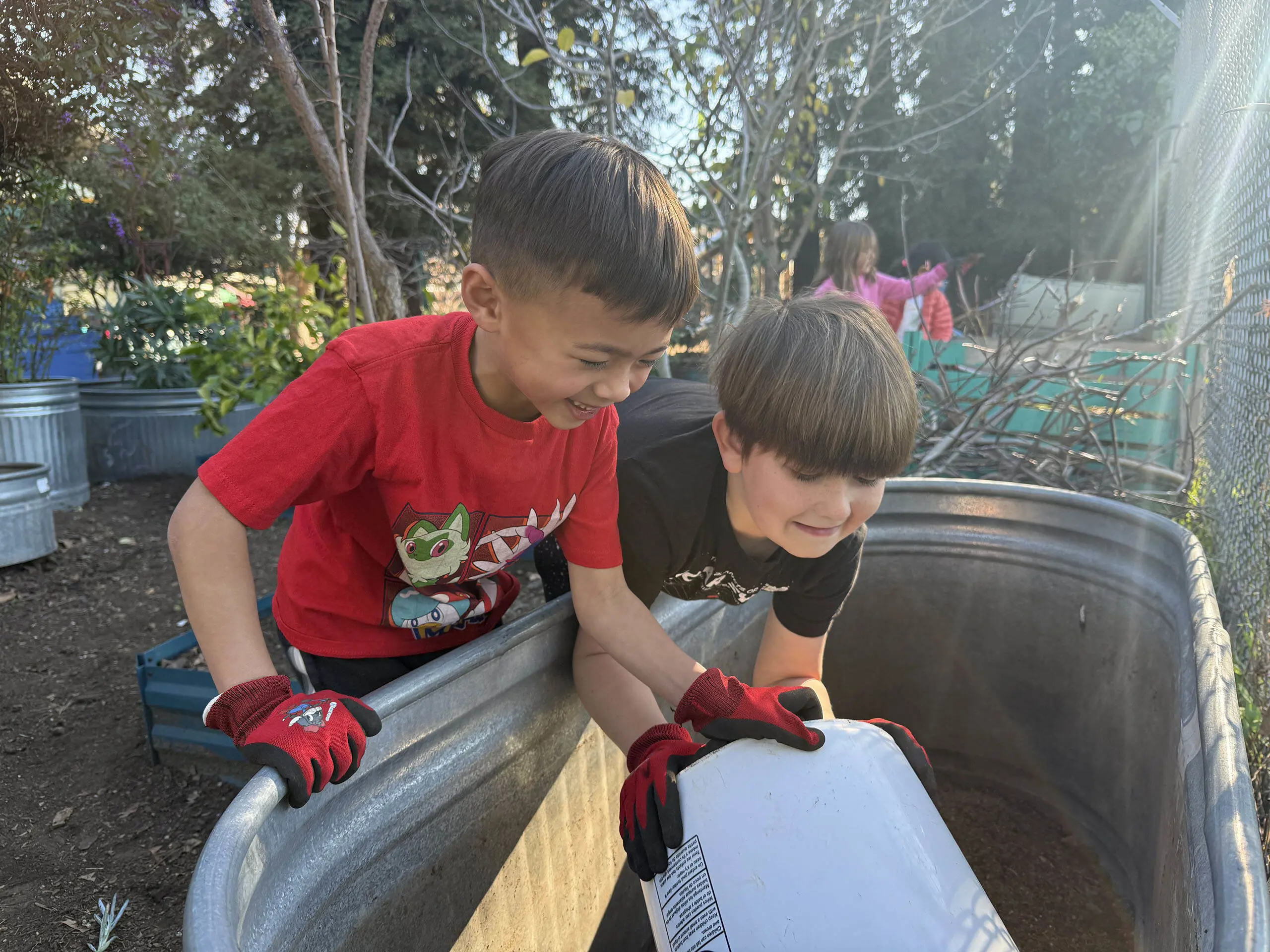
The Garden to Table program aims to create curious eaters and growers by promoting intentional interactions with the natural world. It also aims to develop empathy for animal and plant life where students become community stewards and responsible global citizens. The program provides hands-on opportunities where young cooks and gardeners cultivate curiosity by exploring food systems and grow as lifelong learners. In Grade 2, cooks and gardeners deepen their understanding of our connected food system, they observe the life cycles of animals and plants, and they provide habitats for them to grow and thrive. Beginning cooks learn and practice knife skills and identify the five tastes while engaging in projects that connect to the core classroom. The Garden to Table classroom is an indoor/outdoor space where all learners have access and agency, and where cross-disciplinary connections make learning multi-dimensional. Second graders learn in the garden and kitchen twice during each eight-day cycle rotation. Approaches to Teaching and Learning in Garden to Table Learning guided by inquiry:
|
| DIVERSITY, EQUITY, INCLUSION, & BELONGING (DEIB) |
In Grade 2, DEIB concepts are developed across the academic program including within Social Emotional Learning, Morning Meetings, and within Equity and Inclusion groups that focus on developing students’ identities and their roles within the Redwood Day community. At this level, students continue building upon their understanding of racial and gender identity through the exploration of justice and change-makers. Students also use this learning to make strong connections to other disciplines, namely in social studies and literature. DEIB learning is aligned to the Learning for Justice Anti-Bias Framework and Social Justice Standards. Approaches to Teaching and Learning in DEIB
|