LOWER SCHOOL CURRICULUM
FIFTH GRADE
| ENGLISH LANGUAGE ARTS |
In Grade 5 English Language Arts, students continue to grow into independent, lifelong readers where their comprehension, accuracy, fluency, and vocabulary are further developed and refined through engaging in reading, analyzing, and discussing more complex texts and honing comprehension strategies. Through the writing process, students create multiple pieces of writing in a variety of genres. Their writing skills are developed through the study of mentor texts, application of author’s craft, and peer and teacher conferences. At this level, research skills are further developed: students utilize a variety of reference materials, they learn how to identify credible sources of information, and they apply critical thinking skills to locate relevant sources of information. Language conventions and listening and speaking skills continue to expand and develop in Grade 5 English Language Arts. Approaches to Teaching and Learning in English Language Arts
|
| WORLD LANGUAGES |
Grade 5 Spanish In Grade 5 Spanish, students use comprehensible input to increase reading, writing, speaking, and listening in the target language. Learning includes interacting with stories which provide a context for rich conversations and practicing targeting vocabulary and grammar structures. Students collectively write familiar stories and create newly generated stories. As a culminating project, students collaborate on writing, illustrating, and publishing a storybook using the ‘Sweet 16’ verbs. Writing and reading comprehension are the focal points of this year. The expectation for fifth-grade Spanish students is to develop confidence in reading and interacting with written texts with familiar vocabulary and grammar structures. As emergent writers, students write sentences in basic structure using the targeted vocabulary. Fifth graders attend Spanish four times during each eight-day cycle rotation. Grade 5 Mandarin In Grade 5 Mandarin, emphasis is placed on learning tones, pronunciation, listening, and speaking. Students demonstrate comprehension by using Mandarin in real-life conversations with their teacher and classmates in an interactive manner. At this level, students explore more advanced topics such as body parts, the weather, and clothing, and they engage in conversations, building on previous knowledge and vocabulary. At this stage, students are able to read and write sentences using a combination of simplified Chinese characters and Pinyin, and they use learned expressions to describe things or people in some detail, using the appropriate pronouns, grammar, and various sentence patterns. Grade 5 students attend Mandarin four times during each eight-day cycle rotation. Approaches to Teaching and Learning in Spanish and Mandarin
|
| PHYSICAL EDUCATION |
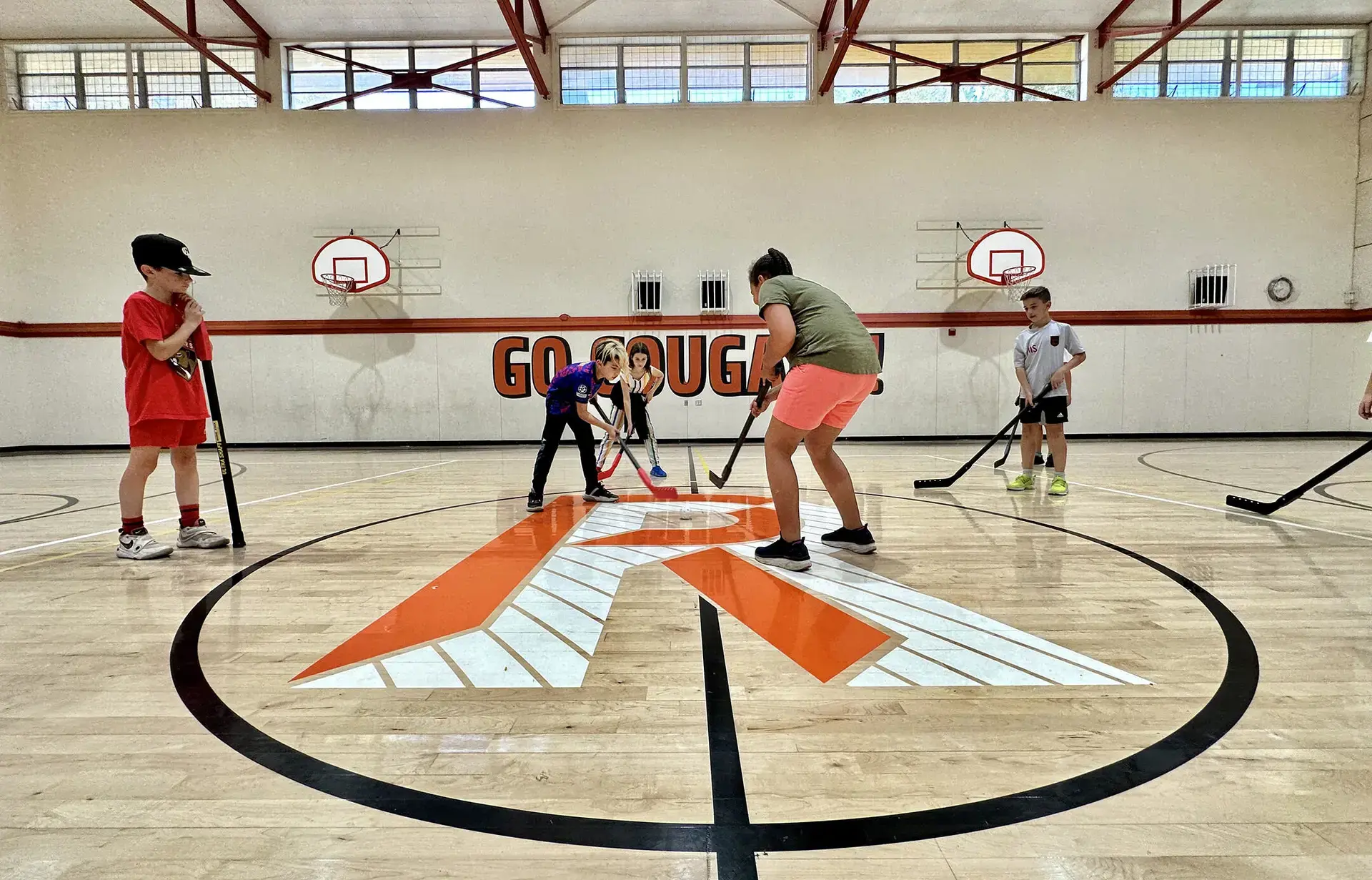
Fifth-grade students, in PE, are encouraged to embrace challenges and learn from their experiences while developing skills of teamwork, communication, and a sense of fair play. At this level, focus is on using correct manipulation techniques (e.g., throwing, catching, striking, kicking, and dribbling) and utilizing hand-eye and eye-foot coordination in manipulative skills to improve accuracy and distance. Students additionally learn and practice appropriate pacing for a variety of running distances and work together in teams during cooperative games and challenges. At this stage, Grade 5 PE learning encourages listening to the ideas of others and celebrating diversity in all forms as awareness of differences arises. Fifth graders have Physical Education three times during each eight-day cycle. Approaches to Teaching and Learning in PE
|
| LIBRARY/INFORMATION LITERACY AND DIGITAL CITIZENSHIP |
The Lower School library program and space invite students to explore ideas and interests, gather and enjoy individual and communal activities, engage in inquiry and research that supports the curriculum, and experience the joy of reading. Lower School students attend library classes once every eight-day cycle where they are exposed to rich, diverse texts, have the opportunity to explore and select books, and learn the fundamentals of information literacy as part of a developmental continuum. Grade 5 students gain important digital citizenship skills and learn responsible, safe, and healthy use of technology through classes taught in the core classroom facilitated by our technology specialist and core teachers. Approaches to Learning in the Library/Information Literacy
|
| SOCIAL STUDIES |
Through the lens of multiple perspectives and beginning with the question of “Who writes history?” students, in Grade 5 Social Studies, focus on U.S. history from English settlements to colonization, the Declaration of Independence and the American Revolution, from colonies to a country, and the forming of the U.S. Constitution. Students explore the theme of “government” and forms of governing throughout history. This is grounded in a close study of contemporary U.S. government systems, via indirect democracy and the electoral process. Students then take a deep dive into the events surrounding early European conquest, migratory movements, and early settlements and their impacts on indigenous peoples. This leads to a study of revolutionary movements contextualized by the 13 British colonies and the American War of Independence. Students synthesize their understanding of the role of government in the lives of people by making connections between social movements, major historical events, and the ways that constitutional law has been created to invoke social change, both past and present. Students learn through analyzing primary and secondary sources, connecting the past to the present, hands-on activities, and multimedia projects Approaches to Teaching and Learning in Social Studies
|
| GARDEN TO TABLE |
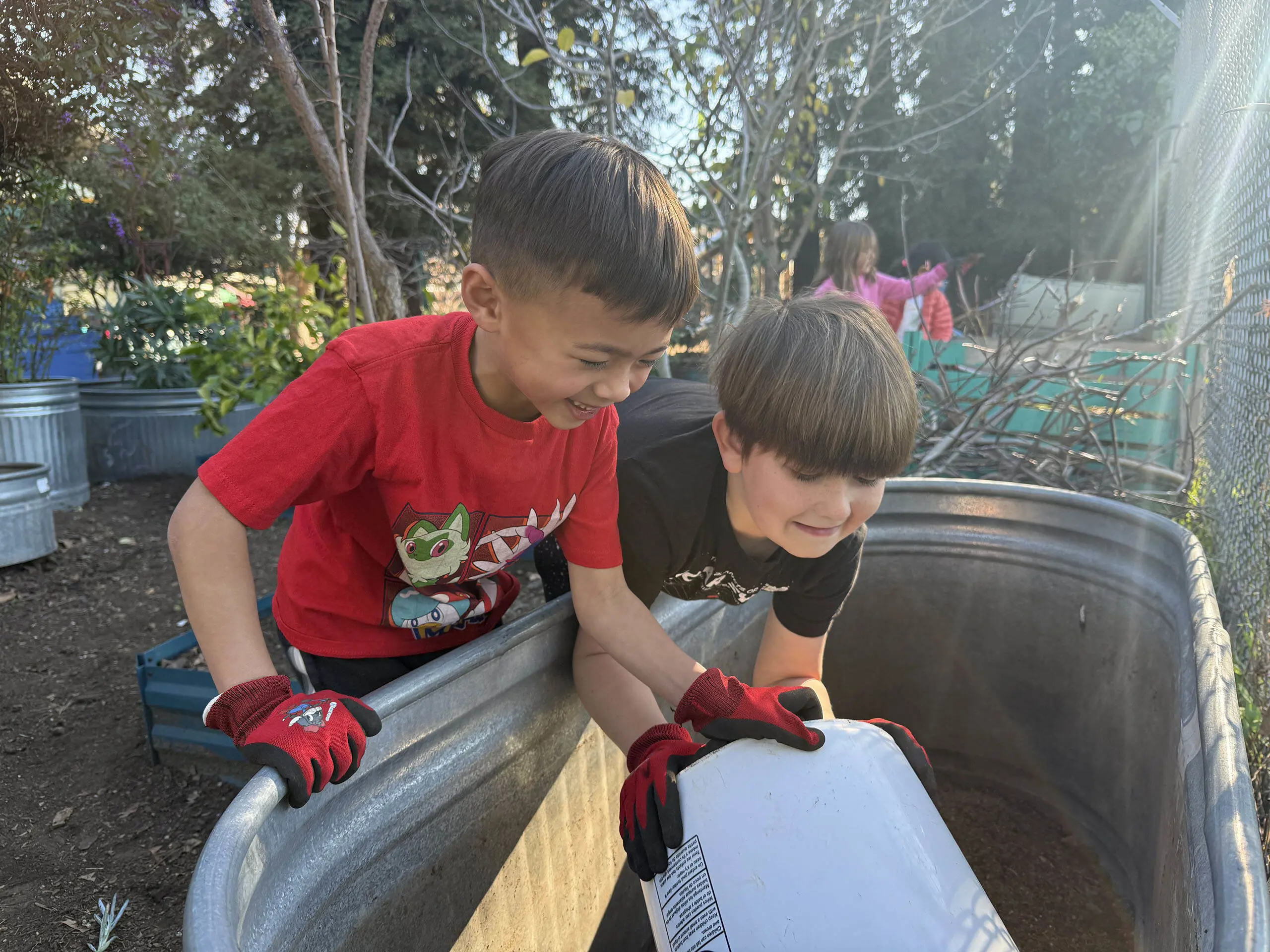
In Grade 5 Garden to Table, students keep our plants and habitats healthy and learn how to apply their growing knowledge to the kitchen classroom. The oldest Lower School students apply their knowledge of ecosystems and sustainability in their annual STEAM projects, and they actively participate and engage in the design and structure of the garden, nurturing and harvesting varieties of plants (including edibles). Fifth graders also utilize their skills and food knowledge to cook recipes connected to their core curriculum. Students learn in the garden once during each eight-day cycle rotation and engage in cooking throughout the year in sessions coordinated with the core curriculum. Approaches to Teaching and Learning in Garden to Table
|
| MATHEMATICS |
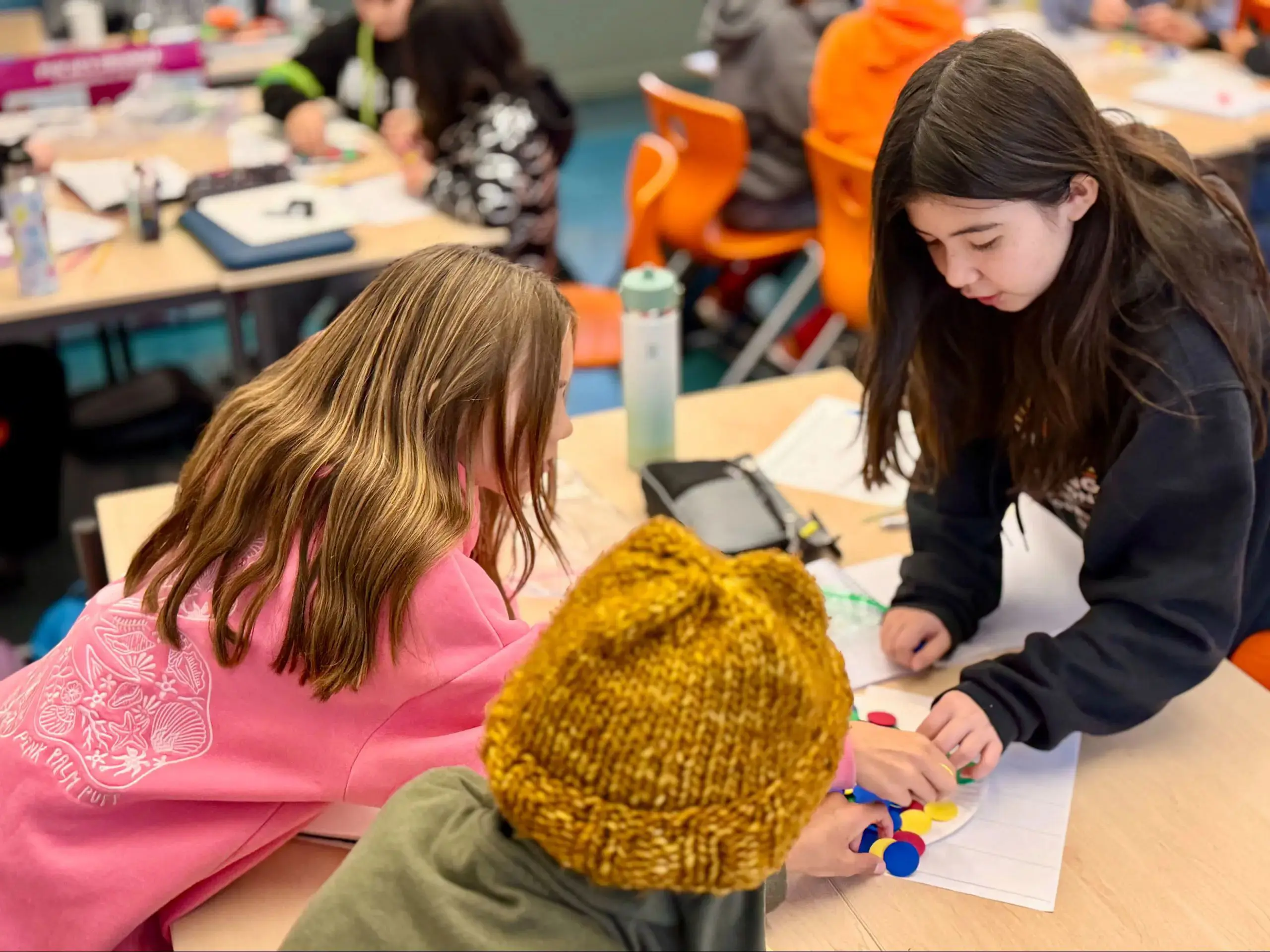
In Grade 5, in Math, students build on their understanding from previous grades creating a solid foundation for success as mathematicians. This understanding is developed through the pedagogy of the Singapore Math framework, which emphasizes concept mastery, a concrete-pictorial-abstract approach, metacognitive reasoning, and the use of model drawing to solve problems and justify solutions. At this level, students learn advanced multiplication and division, fractions and mixed numbers, conversion of fractions to decimals and percents, an introduction to algebra and ratio, graphs and probability, surface area and measuring volume. Along with each math concept, students further these skills and apply them to solve multi-step word problems with emphasis placed on building a conceptual understanding through challenging problem-solving and skill consolidation. Approaches to Teaching and Learning in Math
|
| DESIGN, BUILD, INNOVATE |
In Grade 5 DBi, students explore the theme of Design Thinking, where learning is focused on developing a variety of prototype-building skills, including the use of motors and paper engineering. Fifth graders also use design thinking skills to design and build analog and digital projects where the emphasis is on design accessibility. Students work in the DBi Lab ten times within a semester of learning. Approaches to Teaching and Learning in DBi
|
| MUSIC |
In Grade 5 Music, expressing, creating, and performing continue to be integral to developing and deepening students’ music skills and literacy. At this level, students learn concepts of rhythm, melody, harmony, form, texture, and tonality. Further focus is on improvising, composing, evaluating, responding to, reading and notating music. Grade 5 students also use research and presentation skills for a final project to showcase their learning. Schoolwide performances provide culminating experiences for students as they expand their participation in singing, instrument exploration, and creative movement. Fifth graders have Music three times during each eight-day cycle. Approaches to Teaching and Learning in Music
|
| DIVERSITY, EQUITY, INCLUSION & BELONGING (DEIB) |
In Grade 5, DEIB concepts are developed across the academic program, including within Social Emotional Learning, Morning Meetings, and within Equity and Inclusion groups that focus on developing students’ identities and their roles within the Redwood Day community. At this level, student learning centers on recapping the meaning of diversity, equity, inclusion, and belonging and applying what they have learned across their experience in the Lower School to taking action against bias and injustice. Students use these ideas to participate in project-based learning with the aim to equip students with social-emotional tools as they prepare for their transition to middle school. Approaches to Teaching and Learning in DEIB
|
| SCIENCE |
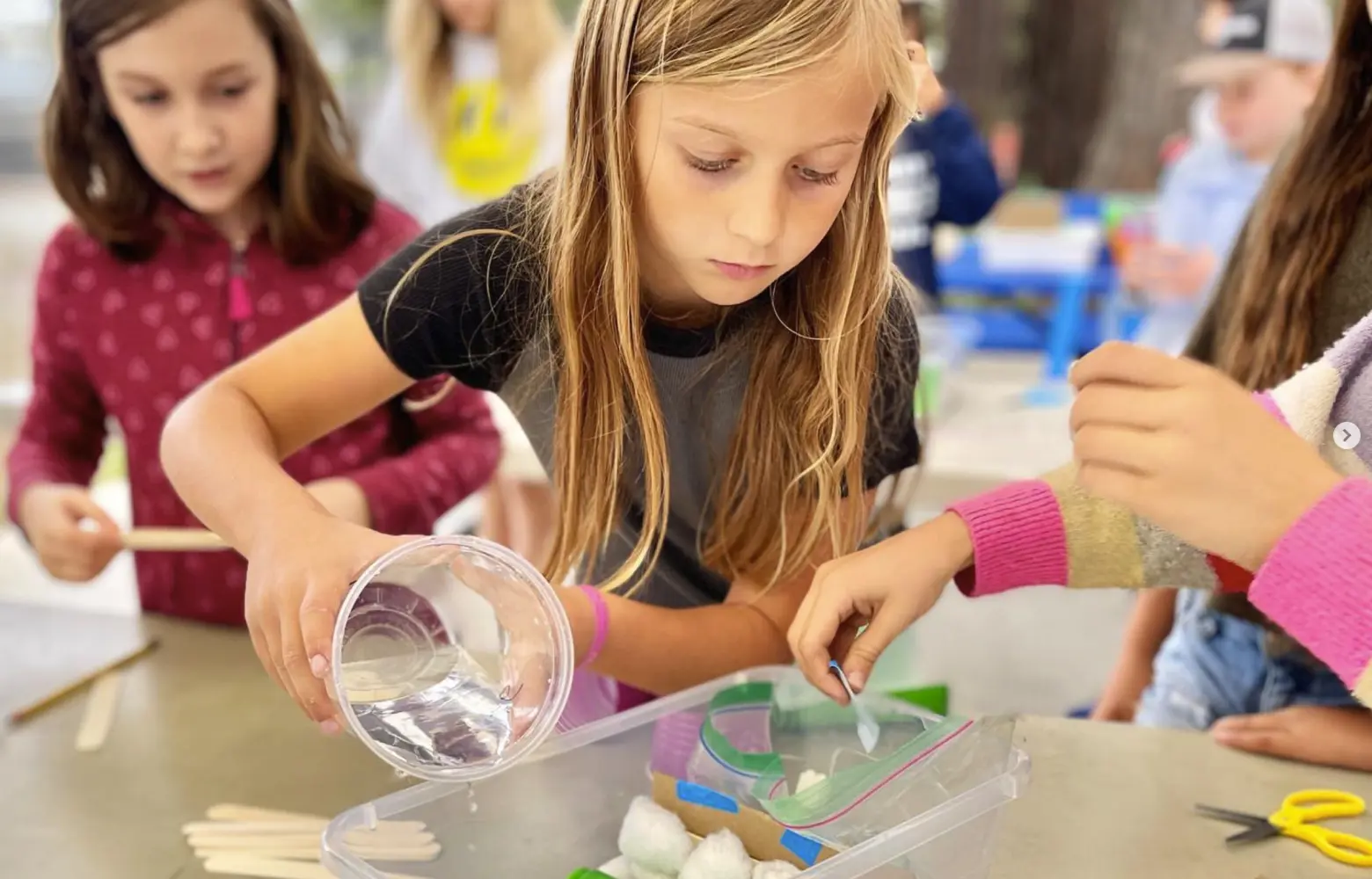
In Science in Grade 5, students engage in science investigations where they pose questions, observe patterns and scientific phenomenon, make predictions, and communicate what they observe with others. Inquiry in fifth grade includes: What is matter and what happens when samples of matter interact? How do Earth’s geosphere, hydrosphere, atmosphere, and biosphere interact to create a sustainable environment for all of life? How can we describe Earth’s Biosphere as a system of interacting parts? Learning is centered on hands-on investigations using the Full Option Science Systems (FOSS) materials. Grade 5 students have science three times during each eight-day cycle rotation. Approaches to Teaching and Learning in Science
|
| ART |
Lower School Art is where students explore and express their creativity through a variety of mediums and study artists from diverse backgrounds. As our Lower School “seniors” prepare for Middle School, they explore the theme “Expressing Ideas and Emotions” in Art. By Grade 5, children are more capable of abstract thinking and can start to explore how art can be used to express personal ideas, feelings, and social messages. The theme focuses on self-expression, encouraging students to create art that conveys emotions or opinions. Students work on creating portraits that express identity, abstract art focusing on mood, themed projects about social issues, and mixed media art that combines text and imagery. Nick Cave (the visual artist), Wangechi Mutu, Frida Kahlo, and Zanele Muholi are among the many global artists students study at this level as they work to hone their artistic voices. Grade 5 students attend Art three times during each eight-day cycle rotation. Approaches to Teaching and Learning in Art
|
| OUTDOOR EDUCATION |
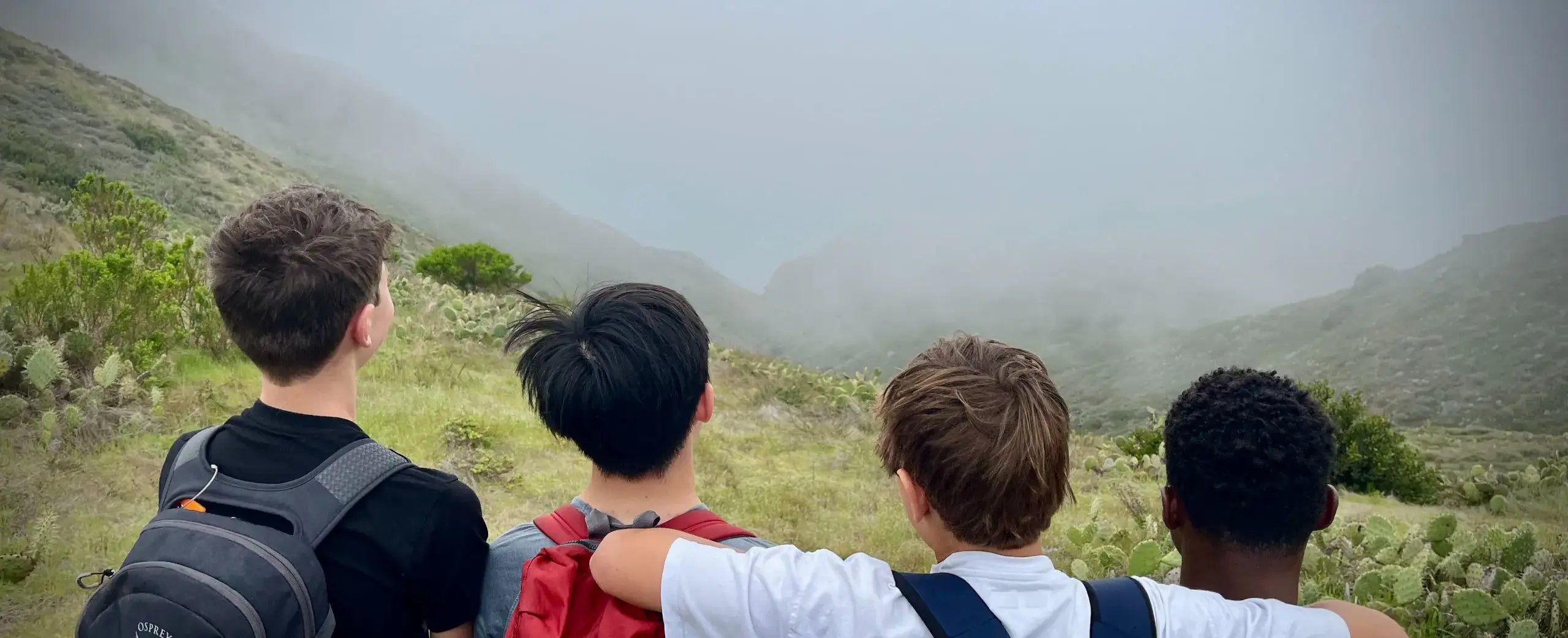
| Outdoor Education takes students outside of the familiarity of the classroom, encourages them to undertake challenges that develop new skills, and connects learning beyond school walls. In February, for two nights and three days, Grade 5 students go to the Pigeon Point Lighthouse in Pescadero where they participate in an environmental education and character development program that includes a hands-on, experiential approach focusing on adventure, self-discovery, and environmental stewardship. This experience is led by Exploring New Horizons and chaperoned by the Grade 5 teachers and parent and guardian volunteers. |